In This Article
Yoga isn't just about flexibility — it's one of the most effective natural tools for managing anxiety. Research published in the Journal of Clinical Psychology shows that regular yoga practice can reduce anxiety symptoms by up to 40%, with benefits appearing in as few as 6 sessions.
Unlike high-intensity exercise, yoga specifically targets the parasympathetic nervous system (your body's "rest and digest" mode), making it uniquely suited for anxiety relief. In this guide, we'll cover the 10 most effective poses, how to sequence them, and the best apps to guide your practice.
Why Yoga Works for Anxiety
Yoga reduces anxiety through several mechanisms that work together:
- Vagus nerve activation — deep breathing in yoga stimulates the vagus nerve, which controls your relaxation response
- Cortisol reduction — studies show yoga lowers cortisol (the stress hormone) more effectively than passive rest
- Body awareness — yoga teaches you to notice physical tension before it escalates into full anxiety
- Present-moment focus — holding poses requires concentration, pulling your mind out of anxious thought loops
- Muscle tension release — anxiety creates physical tension; yoga systematically releases it
Looking for Professional Support Beyond Self-Help?
Self-help tools and guides are great for daily calm, but combining mindfulness with professional CBT therapy is proven to provide long-term anxiety and stress relief. Online-Therapy.com pairs you with a personal licensed therapist, daily worksheets, audio guides, and journaling tools from $48/week (20% off first month).
Explore Online Therapy (20% Off) →Affiliate link — we earn a commission at no extra cost to you
Try Our Free Sleep Routine Builder
Build a custom bedtime wind-down routine tailored to your available time (5 to 30 mins). Runs 100% privately in your browser with zero sign-up.
Open Sleep Routine Builder →10 Best Yoga Poses for Anxiety
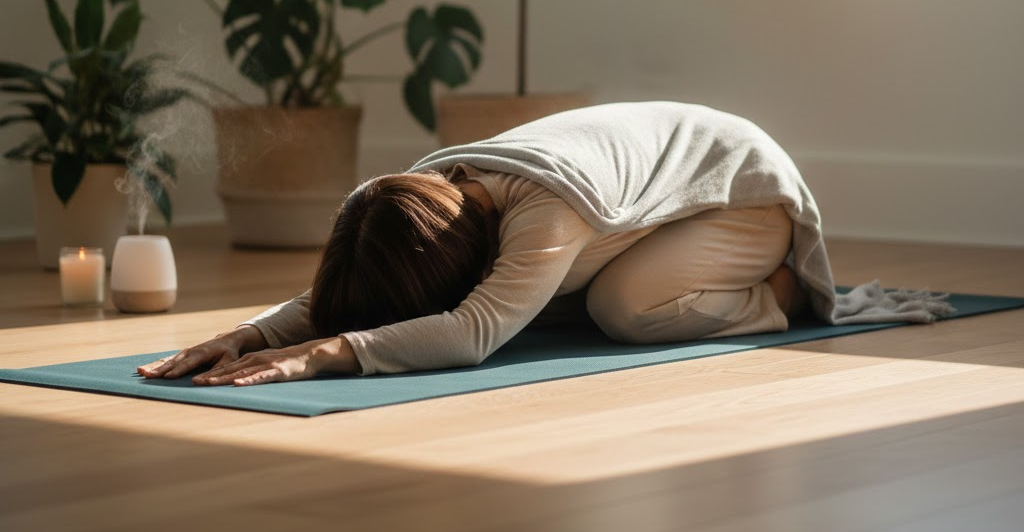
1. Child's Pose (Balasana)
The ultimate grounding pose. Kneel on the floor, sit back on your heels, and fold forward with arms extended. Rest your forehead on the mat. This gentle forward fold activates the parasympathetic nervous system and creates a sense of safety. Hold for 1-3 minutes, breathing deeply into your back body.
2. Legs Up the Wall (Viparita Karani)
Lie on your back with legs extended up against a wall. This gentle inversion calms the nervous system, reduces heart rate, and relieves tension in the legs and lower back. It's particularly effective before bed for anxiety-related insomnia. Hold for 5-10 minutes.
3. Cat-Cow (Marjaryasana-Bitilakasana)
On all fours, alternate between arching your back (cow) and rounding it (cat), synchronising with your breath. This rhythmic movement releases spinal tension and creates a meditative breathing pattern. Do 10-15 rounds slowly.
4. Standing Forward Fold (Uttanasana)
Stand with feet hip-width apart, fold forward from the hips, and let your upper body hang. Grab opposite elbows and gently sway. Forward folds are naturally calming — the inversion effect helps quiet a busy mind. Hold for 1-2 minutes.
5. Bridge Pose (Setu Bandhasana)
Lie on your back, bend knees, and lift your hips. This gentle backbend opens the chest and counteracts the hunched posture common in anxious people. It also stretches the hip flexors, where we store emotional tension. Hold for 30-60 seconds.
6. Reclined Bound Angle (Supta Baddha Konasana)
Lie back with the soles of your feet together and knees falling open. Place a pillow under each knee for support. This deeply restorative pose opens the hips and chest whilst signalling complete safety to your nervous system. Hold for 3-5 minutes.
7. Seated Forward Fold (Paschimottanasana)
Sit with legs extended and fold forward over your legs. Don't worry about touching your toes — the calming effect comes from the forward fold, not the depth. Use a strap or towel around your feet if needed. Hold for 1-2 minutes.
8. Supine Twist (Supta Matsyendrasana)
Lie on your back, draw one knee to your chest, and guide it across your body. Twists release tension in the spine and activate the vagus nerve. The supine position makes this deeply relaxing. Hold each side for 1-2 minutes.
9. Corpse Pose (Savasana)
Lie flat on your back with arms by your sides, palms up. Close your eyes and consciously relax every muscle. This is where the integration happens — your nervous system processes the relaxation from your practice. Stay for 5-10 minutes minimum.
10. Extended Puppy Pose (Uttana Shishosana)
From all fours, walk your hands forward and lower your chest towards the floor whilst keeping hips above knees. A beautiful combination of child's pose and downward dog that opens the shoulders and calms the mind. Hold for 1-2 minutes.
Looking for Yoga & CBT Therapy Combined?
Yogic movement calms physical anxiety, but combining somatic movement with professional cognitive behavioral therapy (CBT) provides long-term emotional recovery. Online-Therapy.com pairs you with a personal licensed therapist, guided video yoga & meditation sessions, CBT worksheets, and daily support from $48/week (20% off first month).
Explore Online Therapy + Yoga (20% Off) →Affiliate link — we earn a commission at no extra cost to you
A 20-Minute Calming Sequence
Follow this order for a complete anxiety-relief practice:
- Child's Pose — 2 minutes (ground yourself)
- Cat-Cow — 10 rounds (warm up the spine)
- Standing Forward Fold — 1 minute (release tension)
- Bridge Pose — 2 × 30 seconds (open the chest)
- Seated Forward Fold — 2 minutes (calm the mind)
- Supine Twist — 1 minute each side (release the spine)
- Reclined Bound Angle — 3 minutes (deep rest)
- Legs Up the Wall — 3 minutes (nervous system reset)
- Savasana — 5 minutes (integration)
Best Yoga Styles for Anxiety
Not all yoga is created equal when it comes to anxiety. Avoid vigorous styles like hot yoga or power vinyasa, which can actually increase cortisol levels. Instead, focus on these calming styles:
- Yin yoga — slow, deep stretches held for 3-5 minutes. Excellent for releasing stored tension
- Restorative yoga — fully supported poses using props. The most calming style available
- Hatha yoga — gentle, foundational poses with emphasis on breathwork
- Yoga nidra — guided relaxation in savasana (read our full guide)
Best Yoga Apps for Anxiety
| App | Best For | Price | |
|---|---|---|---|
| Alo Moves | Best overall yoga for anxiety | $14/mo | Try Free → |
| YogaDownload | Budget-friendly classes | $10/mo | Try Free → |
| Insight Timer | Free yoga nidra sessions | Free | Try Free → |
Combining Yoga with Meditation
For maximum anxiety relief, combine your yoga practice with meditation. Start with 10-15 minutes of yoga to release physical tension, then transition to seated or lying meditation for 10 minutes. This combination is more effective than either practice alone.
Read our complete guide: Meditation for Anxiety: A Complete Beginner's Guide
Take Our Free Anxiety & Wellness Self-Assessment
Check your stress levels and get matched to the right relaxation exercises for your mood.
Start Free Assessment →Frequently Asked Questions
Can I do yoga for anxiety as a complete beginner?
Absolutely. All 10 poses listed above are beginner-friendly. Start with child's pose, legs up the wall, and savasana — these require zero yoga experience and provide immediate calming benefits.
How often should I practise yoga for anxiety?
Even 2-3 sessions per week show significant anxiety reduction in studies.[1] Daily practice of even 10-15 minutes produces the best results. Consistency matters more than session length.
Is yoga better than meditation for anxiety?
They work differently. Yoga addresses the physical symptoms (tension, shallow breathing), whilst meditation addresses mental patterns (rumination, worry). The combination is most effective. Read our yoga vs meditation comparison for a detailed breakdown.
Sources & References
- [1] International Journal of Yoga / PubMed — Exploring the Therapeutic Effects of Yoga on Complex Stress and Mental Health
- [2] Journal of Alternative and Complementary Medicine — Effects of Yoga on Anxiety and Depression: Systematic Review
- [3] Harvard Health Publishing — Yoga for Anxiety and Depression: How it Helps Calm the Nervous System
For general information only, not a substitute for professional medical care. In a crisis or severe symptom onset, consult a qualified healthcare provider immediately.