In This Article
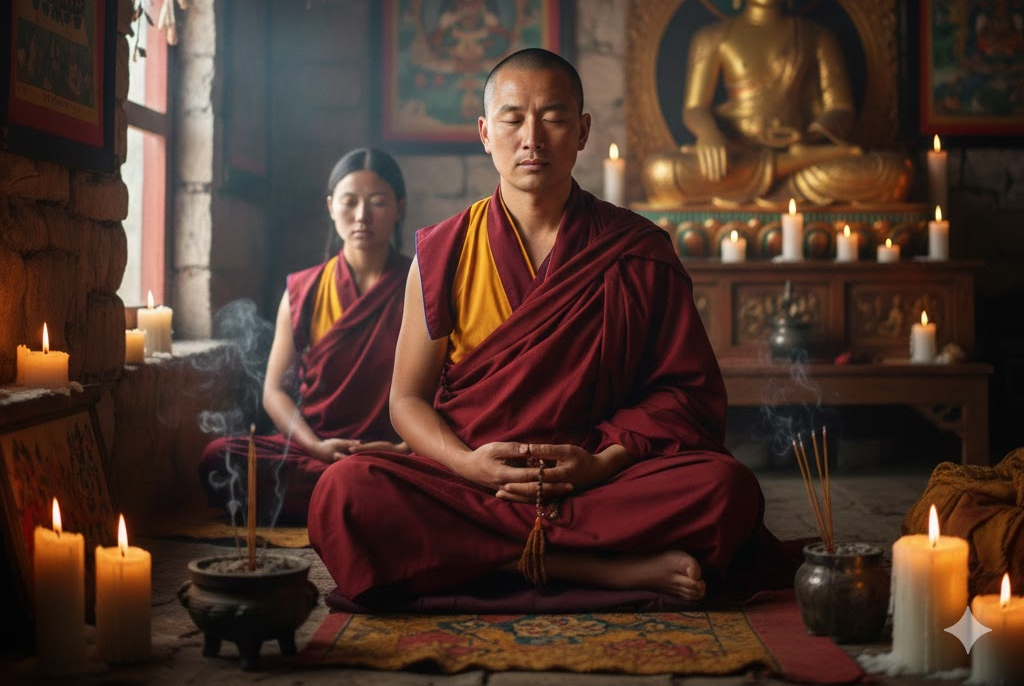
Tibetan Buddhist meditation is the richest and most elaborate of all Buddhist meditation traditions. Where Zen strips meditation to its bare essence and vipassana systematically observes sensations, Tibetan practice uses the full palette of human experience — visualisation, mantra, emotion, imagination, and devotion — as tools for transformation.
If other forms of meditation feel too dry or austere, Tibetan practices might resonate. They're colourful, engaging, and surprisingly practical for modern psychological wellbeing.
What Is Tibetan Meditation?
Tibetan Buddhism developed in Tibet from the 7th century onward, integrating Indian Buddhist philosophy with local spiritual traditions. Its meditation practices fall into several categories:
- Shamatha (calm abiding) — basic concentration training, similar to other Buddhist traditions
- Tonglen (giving and taking) — a compassion practice unique to Tibet, breathing in suffering and breathing out relief
- Deity yoga — visualising yourself as an enlightened being to cultivate their qualities
- Mantra recitation — repeating sacred syllables as concentration anchors
- Dzogchen/Mahamudra — advanced practices of resting in the natural state of awareness
- Analytical meditation — contemplating specific topics (impermanence, compassion, emptiness) to develop insight
Featured Mindful.org Official Online Courses & Training
Deepen your daily mindfulness and meditation practice with certified online courses led by world-renowned teachers at Mindful.org:


Official Mindful.org Partner · Self-Paced Online Training
Try Our Free Guided Breathing Tool
Interactive breathing pacer for box breathing, 4-7-8, and coherent breathing. Runs 100% privately in your browser with zero sign-up.
Open Guided Breathing Tool →Key Tibetan Meditation Practices
1. Shamatha with Object
The foundation. Focus on a visual object — traditionally, a small image of the Buddha or a flame. Fix your gaze softly and maintain attention. When the mind wanders, return. This builds the concentration needed for all other practices.
Modern adaptation: You can use any simple object — a stone, a candle flame, or even a dot on the wall. The object is less important than the quality of attention.
2. Tonglen (Giving and Taking)
The most psychologically powerful Tibetan practice. See the dedicated section below.
3. Deity Yoga (Visualisation)
You visualise yourself as an enlightened being — Avalokiteshvara (compassion), Manjushri (wisdom), or Tara (protection) — complete with their form, colour, and qualities. The purpose isn't worship but transformation: by repeatedly imagining yourself as a compassionate being, you cultivate compassion. By imagining yourself as wise, you develop wisdom.
Modern parallel: This is essentially sophisticated mental rehearsal — similar to how athletes visualise performance. Neuroscience shows that visualisation activates the same brain regions as actual experience.
4. Dzogchen (Great Perfection)
The most advanced Tibetan practice. Dzogchen teaches that awareness itself is already perfect — you don't need to create or achieve anything, just recognise what's already present. The practice involves receiving "pointing out" instructions from a teacher and then resting in the recognition of natural awareness.
Modern access: Sam Harris's Waking Up app includes Dzogchen-inspired teachings from Loch Kelly and others, making this traditionally secret practice more accessible.
Tonglen: The Practice of Giving and Taking
Tonglen is counterintuitive and revolutionary. Instead of pushing away suffering (the instinct of every other stress-reduction technique), tonglen teaches you to breathe it in — and breathe out relief, compassion, and healing.
The technique
- Settle — sit comfortably, take a few breaths, rest in open awareness for a moment.
- Flash — briefly contact a feeling of spaciousness and warmth. Just a flash — don't force it.
- Breathe in suffering — visualise dark, heavy smoke. Breathe it in, imagining it dissolves in the spaciousness of your heart.
- Breathe out relief — visualise bright, cooling light. Send it outward with genuine wish for the person's wellbeing.
- Start with yourself — breathe in your own pain, breathe out kindness to yourself.
- Expand — to a loved one's suffering, then a stranger's, then a difficult person's, then the world's.
Why does tonglen work?
Tonglen reverses the habitual pattern of avoiding discomfort and grasping for pleasure — which Buddhist psychology identifies as the root of suffering. By voluntarily "taking in" difficulty, you discover that you can handle more than you think. The fear of suffering diminishes. Compassion naturally expands.
Research on compassion-based meditation (related to tonglen) shows reduced stress reactivity, increased emotional resilience, and greater prosocial behaviour.
Best for Tibetan Practice: Waking Up
Sam Harris's app includes Dzogchen teachings from Loch Kelly, Tibetan-inspired compassion practices, and philosophical depth.
Try Waking Up Free →Affiliate link — we earn a commission at no extra cost to you
Mantras & Visualisation
Tibetan meditation makes extensive use of mantras — sacred syllables repeated silently or aloud. The most famous:
Om Mani Padme Hum
The mantra of Avalokiteshvara, the bodhisattva of compassion. Each syllable is said to purify a different negative quality: pride, jealousy, desire, ignorance, greed, and anger. Even without accepting the traditional framework, the rhythmic repetition provides a powerful concentration anchor and induces calm.
Om Tare Tuttare Ture Soha
The mantra of Tara, associated with protection and removing obstacles. Popular with practitioners facing fear or difficulty.
See our Buddhist mantra meditation guide for detailed instructions on using mantras in practice.
Building a Tibetan Meditation Practice
- Week 1-2: Shamatha with breath or visual object (15 min daily). Build concentration first.
- Week 3-4: Add tonglen (10 min). Start with self, then loved ones.
- Month 2: Explore mantra meditation (Om Mani Padme Hum, 10-15 min).
- Month 3+: Combine: shamatha (10 min) → tonglen (10 min) → mantra (5 min). Total 25 minutes.
Apps & Resources
| Resource | Tibetan Content | Price | |
|---|---|---|---|
| Waking Up | Dzogchen, tonglen, Tibetan philosophy | $99.99/yr | Try Free → |
| Insight Timer | Thousands of free Tibetan practice sessions | Free | Try Free → |
| Tergar App | Mingyur Rinpoche's guided practices | Free/paid | Try Free → |
Books: "The Joy of Living" by Mingyur Rinpoche (accessible, science-informed). "When Things Fall Apart" by Pema Chödrön (tonglen and everyday compassion). "Start Where You Are" by Pema Chödrön (practical tonglen guide).
Take Our Free Anxiety & Wellness Self-Assessment
Check your stress levels and get matched to the right relaxation exercises for your mood.
Start Free Assessment →FAQs
Do I need a teacher for Tibetan meditation?
For basic practices (shamatha, tonglen, mantra), books and apps are sufficient. For advanced practices (deity yoga, Dzogchen), a qualified teacher is traditionally considered essential. Many Tibetan teachers now offer online courses.
Is Tibetan meditation religious?
The traditional practices are embedded in Tibetan Buddhist philosophy, but many techniques — especially tonglen, shamatha, and mantra — can be practised secularly. Pema Chödrön and Mingyur Rinpoche both teach in ways accessible to secular practitioners.
What's the difference between Tibetan and Zen meditation?
Zen is minimalist (just sit). Tibetan is maximalist (visualise, chant, feel, imagine). Zen strips away everything; Tibetan uses everything. Both lead to similar insights through very different paths. See our Zen meditation guide.
Related Articles


Sources & References
- [1] Frontiers in Human Neuroscience / PubMed — Neurobiology of Buddhist Meditation and Focused Attention Practices
- [2] Springer / Mindfulness Journal — Theravada Mindfulness Practices (Anapanasati & Vipassana) in Modern Psychological Interventions
- [3] NCCIH (National Institutes of Health) — Meditation: In-Depth Overview
For general information only, not a substitute for professional medical care. In a crisis or severe symptom onset, consult a qualified healthcare provider immediately.