In This Article
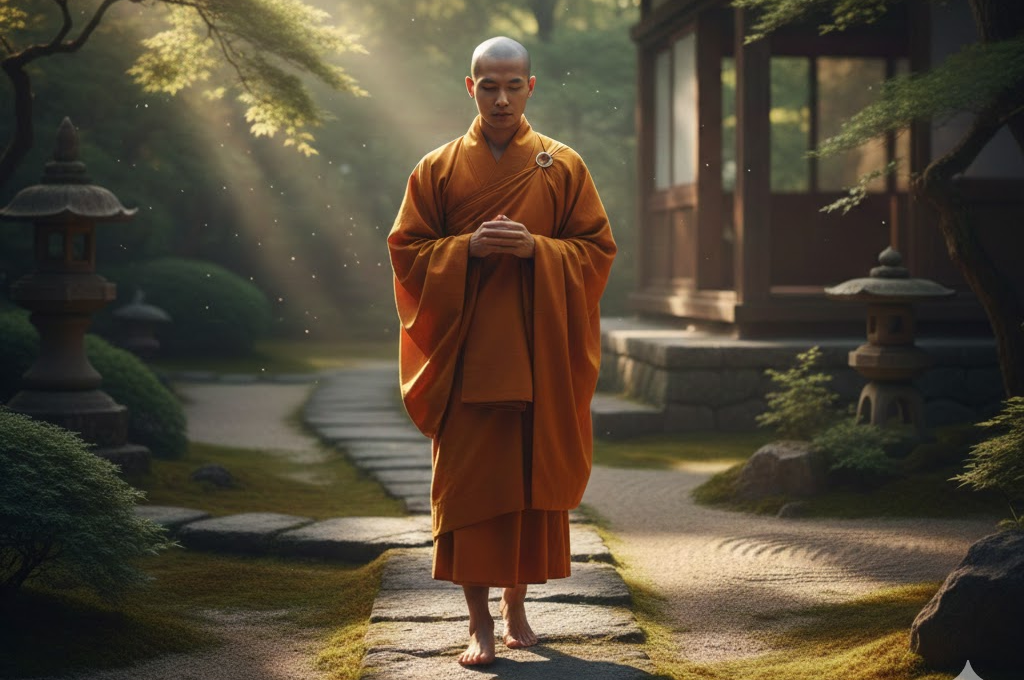
Walking meditation is one of Buddhism's most accessible yet underappreciated practices. While sitting meditation gets all the attention, the Buddha himself taught walking meditation as an equal practice — and for many people, it's actually easier, more enjoyable, and more sustainable than sitting.
If you've tried sitting meditation and found it frustrating, if you have ADHD, chronic pain, or simply an active body that rebels against stillness — walking meditation might be your entry point to a lifelong practice.
What Is Walking Meditation?
Walking meditation is the practice of bringing full, deliberate attention to the act of walking. You walk slowly (much slower than normal), focusing on the physical sensations of each step — the lifting of the foot, the movement through space, the placement on the ground, and the shift of weight.
It's not a walk with meditation on top. It's walking as meditation — the movement itself is the practice, not a backdrop for thinking or listening to a guided audio.
Every major Buddhist tradition includes walking meditation:
- Theravada: Slow, systematic walking as a primary practice alongside sitting
- Zen (Kinhin): Walking between sitting periods, often in a group
- Thich Nhat Hanh's tradition: Gentle, natural-paced walking with breath coordination
Featured Mindful.org Official Online Courses & Training
Deepen your daily mindfulness and meditation practice with certified online courses led by world-renowned teachers at Mindful.org:


Official Mindful.org Partner · Self-Paced Online Training
Try Our Free Guided Breathing Tool
Interactive breathing pacer for box breathing, 4-7-8, and coherent breathing. Runs 100% privately in your browser with zero sign-up.
Open Guided Breathing Tool →Why Walking Meditation Works
- More accessible than sitting — your body has something to do, which is easier for restless, active, or ADHD minds
- Combats drowsiness — unlike sitting (where sleepiness is a constant threat), walking keeps you alert
- Bridges meditation and daily life — walking is something you do every day; training awareness during walking transfers mindfulness to all movement
- Physical benefits — gentle movement improves circulation, reduces stiffness from sitting, and provides light exercise
- Emotional processing — many practitioners find that difficult emotions surface more gently during walking than sitting, making them easier to process
- No equipment needed — you can practise anywhere, anytime, with no cushion, app, or timer
Theravada Walking Meditation
In the Theravada tradition, walking meditation is a primary practice — monks often spend as much time walking as sitting. The technique is systematic and detailed:
The path
Choose a straight path of 10-20 paces. You'll walk back and forth along this path. Keeping the same path prevents the mind from being stimulated by changing scenery.
The technique
- Stand at one end. Hands clasped gently in front or behind you.
- Begin walking very slowly. Mentally note each component: "lifting... moving... placing..." as you feel the corresponding sensation in your foot.
- At the end of the path, stop. Note "standing, standing." Then "turning, turning" as you turn around.
- Walk back. Repeat for 20-45 minutes.
Levels of detail
Beginner: Note "left, right, left, right" coordinated with steps.
Intermediate: "Lifting, placing. Lifting, placing."
Advanced: "Lifting, moving, placing. Lifting, moving, placing." — noting each micro-phase.
Zen Walking Meditation (Kinhin)
Kinhin is practised between periods of zazen and has a different quality — more formal, often done in a group:
Soto Zen style (slow)
Hands in shashu mudra (left fist wrapped by right hand, held at chest). One half-step per breath — inhale, lift foot; exhale, place foot. Very slow, very deliberate. Eyes cast downward.
Rinzai Zen style (fast)
Quicker pace, almost normal walking speed but with full awareness. The energy is more vigorous, matching the intensity of koan practice.
Thich Nhat Hanh's Approach
The Vietnamese Zen master Thich Nhat Hanh popularised the most accessible form of walking meditation. His approach is gentler and can be done at a natural pace:
- Walk at a slow but natural pace — not the ultra-slow Theravada style.
- Coordinate steps with breath: 2-3 steps per inhale, 3-4 steps per exhale.
- With each step, silently say a phrase: "I have arrived" (inhale steps), "I am home" (exhale steps).
- Feel the earth beneath your feet. Feel the air on your skin. Be fully here.
Alternative phrases: "Breathing in, I calm my body. Breathing out, I smile." Or simply "In... in... in... out... out... out..." coordinated with steps.
This style can be practised anywhere — on the way to work, in a park, or even in a supermarket. The Plum Village app (free) offers guided sessions in this tradition.
Best for Walking Meditation: Plum Village App
Thich Nhat Hanh's free app includes guided walking meditations, bells of mindfulness, and teachings on everyday practice.
Download Free →Affiliate link — we earn a commission at no extra cost to you
Where and When to Practise
- Garden or park — ideal. Natural surfaces, minimal distractions
- Indoors — perfectly fine. A hallway or room where you can walk 10-20 paces
- Commute — Thich Nhat Hanh's style works on the walk to the bus, train, or office
- Between sitting sessions — 5-10 minutes of kinhin between 20-minute sits prevents stiffness and refreshes attention
- Lunch break — 10-15 minutes of walking meditation transforms your work day
Take Our Free Anxiety & Wellness Self-Assessment
Check your stress levels and get matched to the right relaxation exercises for your mood.
Start Free Assessment →FAQs
Can walking meditation replace sitting?
In Theravada Buddhism, walking and sitting are considered equally valid practices. Many teachers recommend a combination — walking before sitting helps settle the body, and sitting after walking deepens concentration. For people who genuinely can't sit (due to pain or restlessness), walking can absolutely be a complete practice.
How slow should I walk?
Theravada style: very slow — one step every 3-5 seconds. Zen kinhin: one step per breath cycle. Thich Nhat Hanh: slow but natural pace. Start with whatever feels sustainable and adjust based on your attention capacity.
Do I need to be outside?
No — indoor walking meditation is traditional. Zen kinhin is done inside the zendo, and Theravada practitioners often use covered walkways. A straight path of 10-20 paces is all you need.
Related Articles

Sources & References
- [1] Frontiers in Human Neuroscience / PubMed — Neurobiology of Buddhist Meditation and Focused Attention Practices
- [2] Springer / Mindfulness Journal — Theravada Mindfulness Practices (Anapanasati & Vipassana) in Modern Psychological Interventions
- [3] NCCIH (National Institutes of Health) — Meditation: In-Depth Overview
For general information only, not a substitute for professional medical care. In a crisis or severe symptom onset, consult a qualified healthcare provider immediately.