In This Article
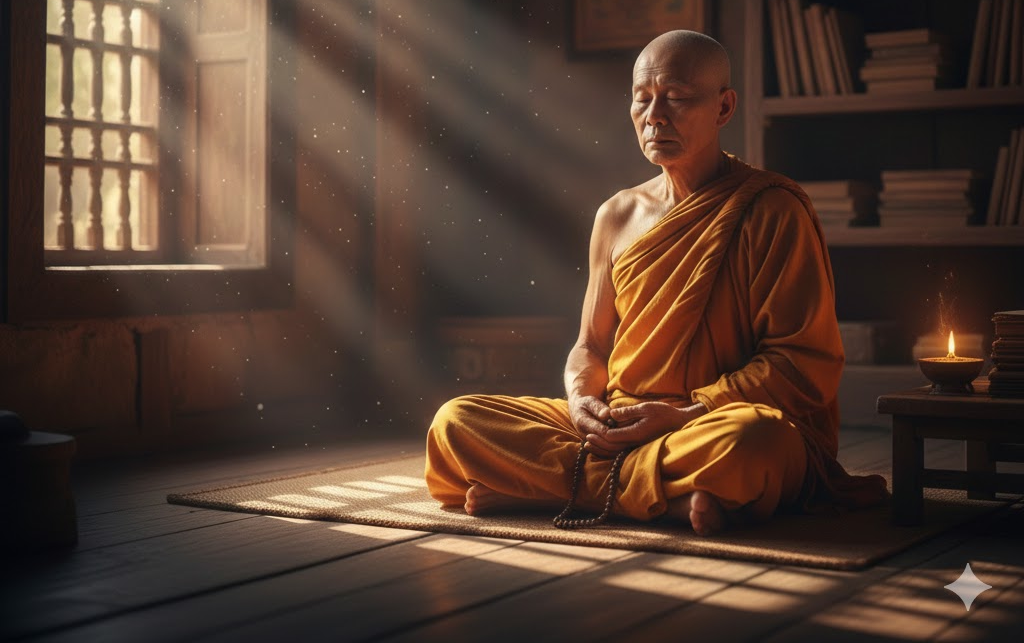
Every time you open Headspace, attend a mindfulness course at work, or practise "present-moment awareness" — you're using a technique that originated 2,500 years ago in Buddhist monasteries. The word "mindfulness" is an English translation of the Pali word "sati," and the practice comes directly from the Buddha's most detailed meditation instructions.
Understanding these roots doesn't require becoming Buddhist. But it does unlock a much richer, more powerful practice than the simplified "pay attention to your breath" version most apps teach.
The Buddhist Origins of Mindfulness
The Buddha's core meditation teaching is the Satipatthana Sutta — the "Discourse on the Foundations of Mindfulness." The Buddha called this "the direct path for the purification of beings, for the overcoming of sorrow and lamentation, for the disappearance of pain and distress, for the attainment of the right method, and for the realisation of Nibbana."
Modern mindfulness programmes — MBSR (Mindfulness-Based Stress Reduction), MBCT (Mindfulness-Based Cognitive Therapy), and most meditation apps — draw primarily from this teaching, adapted for secular Western audiences.
The key difference between Buddhist and secular mindfulness is purpose. Secular mindfulness aims to reduce stress and improve wellbeing. Buddhist mindfulness aims to understand the nature of mind and ultimately end suffering entirely. The techniques overlap substantially, but the depth and direction differ.
Featured Mindful.org Official Online Courses & Training
Deepen your understanding of mindfulness roots and meditation practice with certified online courses led by world-renowned teachers at Mindful.org:


Official Mindful.org Partner · Self-Paced Online Training
Try Our Free CBT Thought Spotter & Trap Breaker
Identify 8 common cognitive distortions and reframe unhelpful thoughts into balanced perspectives. Runs 100% privately in your browser with zero sign-up.
Open CBT Thought Spotter & Trap Breaker →The Four Foundations of Mindfulness
The Buddha identified four objects of mindfulness, practised in sequence:
1. Mindfulness of Body (Kayanupassana)
Start with the most tangible object. Observe the breath, then expand to body posture, physical sensations, and the body's nature. This is what most secular mindfulness teaches — and for many practitioners, it's sufficient for significant stress reduction.
Practices: Breath awareness, body scanning, awareness of posture, walking meditation.
2. Mindfulness of Feelings (Vedananupassana)
"Feelings" here doesn't mean emotions — it means the quality of pleasantness, unpleasantness, or neutrality that accompanies every experience. Before you react to anything (reach for the snack, check your phone, snap at someone), there's a split-second feeling-tone. Mindfulness of feelings catches this before the habitual reaction fires.
Why it matters: This is where meditation becomes genuinely transformative. By noticing the pleasant/unpleasant quality before you react, you gain a choice point. You can respond wisely instead of reacting automatically.
3. Mindfulness of Mind (Cittanupassana)
Observe the overall state of your mind. Is it contracted or expansive? Restless or calm? Clouded or clear? Greedy or content? You don't try to change these states — you observe them, noticing how they arise and pass.
4. Mindfulness of Phenomena (Dhammanupassana)
The most advanced foundation. Observe the patterns of experience — the five hindrances (desire, aversion, sloth, restlessness, doubt), the seven factors of awakening (mindfulness, investigation, energy, joy, tranquillity, concentration, equanimity), and ultimately the Four Noble Truths as they manifest in real-time experience.
Secular Mindfulness vs Buddhist Mindfulness
| Aspect | Secular Mindfulness | Buddhist Mindfulness |
|---|---|---|
| Goal | Stress reduction, wellbeing | Ending suffering, liberation |
| Scope | Mostly body + breath | Body, feelings, mind, phenomena |
| Ethics | Not typically included | Integral (Right Mindfulness includes ethical conduct) |
| Depth | 8-week programme typical | Lifelong practice |
| Philosophy | Minimal/none | Four Noble Truths, Eightfold Path |
| Teacher | Trained facilitator | Experienced practitioner in lineage |
| Effectiveness | Well-evidenced for stress | Well-evidenced + deeper transformation |
Neither is "better." Secular mindfulness is enormously valuable and has helped millions. Buddhist mindfulness goes deeper for those who want more. Many practitioners start secular and gradually explore the Buddhist roots as their practice matures.
How to Practise Buddhist Mindfulness
Week 1-4: Body foundation
20 minutes daily. Breath awareness and body scanning. This is identical to secular mindfulness. Use Headspace, Calm, or Insight Timer. Build consistency before adding depth.
Month 2: Add feeling-tone awareness
During your practice, begin noticing the pleasant/unpleasant/neutral quality of each experience. "This breath feels pleasant." "This itch feels unpleasant." "This sound is neutral." Start noticing this quality in daily life too — before you reach for your phone (pleasant anticipation), before you eat (hunger = unpleasant).
Month 3+: Mind-state awareness
Begin noticing the overall state of your mind. "Right now, the mind is restless." "Right now, the mind is calm." No need to change anything — just notice. This develops metacognitive awareness — the ability to observe your own mental state, which research shows is one of the most powerful predictors of psychological wellbeing.
Best for Deepening Practice: Waking Up
Sam Harris bridges secular and Buddhist mindfulness. Progressive courses from beginner to advanced with genuine philosophical depth.
Try Waking Up Free →Affiliate link — we earn a commission at no extra cost to you
Going Deeper: From Mindfulness to Insight
If secular mindfulness is "Mindfulness 101," Buddhist practice adds:
- Impermanence — noticing that every experience (sensation, thought, emotion) arises and passes. This isn't a concept to believe but an observation to verify, moment by moment.
- Suffering and its cause — observing how craving pleasant experiences and resisting unpleasant ones creates mental suffering in real-time.
- Non-self — investigating who or what is aware. Is there a fixed "self" behind the awareness? Vipassana and Zen both explore this question directly.
Best Apps for Buddhist Mindfulness
| App | Depth Level | Price | |
|---|---|---|---|
| Waking Up | Deep — Buddhist philosophy + practice | $99.99/yr | Try Free → |
| Insight Timer | Varied — beginner to advanced | Free | Try Free → |
| Plum Village | Thich Nhat Hanh tradition (free) | Free | Try Free → |
| Headspace | Beginner — secular with Buddhist roots | $69.99/yr | Try Free → |
Take Our Free Anxiety & Wellness Self-Assessment
Check your stress levels and get matched to the right relaxation exercises for your mood.
Start Free Assessment →FAQs
Should I switch from secular to Buddhist mindfulness?
If your current practice is working for you, there's no need to change. But if you feel you've plateaued or want more depth, exploring the Buddhist foundations can reignite your practice. The techniques build on what you already know.
Do I need to study Buddhist philosophy?
Not necessarily — the practices work through direct experience, not study. But some philosophical understanding (impermanence, the nature of suffering) enriches practice. Books like "Mindfulness in Plain English" by Bhante Gunaratana bridge practice and philosophy beautifully.
Is secular mindfulness "watered down"?
It's simplified, not watered down. For stress reduction and general wellbeing, secular mindfulness is evidence-based and effective. The Buddhist framework adds depth for those who want to go further — but it's not better or worse, just different in scope.
Related Articles


Sources & References
- [1] Journal of Medical Internet Research (JMIR) — Efficacy of Digital Health & Online CBT Interventions
- [2] APA (American Psychological Association) — Telehealth & Mobile Mental Health App Efficacy Guidelines
- [3] NIMH — Technology and the Future of Mental Health Treatment
For general information only, not a substitute for professional medical care. In a crisis or severe symptom onset, consult a qualified healthcare provider immediately.