Body Scan Meditation: Complete Guide for Pain and Sleep
InnerCalmGuide·May 18, 2026·3 min read
Body scan meditation is the most underrated technique in the meditation toolkit. While breath meditation gets all the attention, body scanning is the practice most likely to help with two problems people actually care about: chronic pain and insomnia.
What a Body Scan Actually Does
A body scan is systematic attention to physical sensations, moving from one body part to the next. That sounds simple — and the technique is. But the neurological effects are significant.
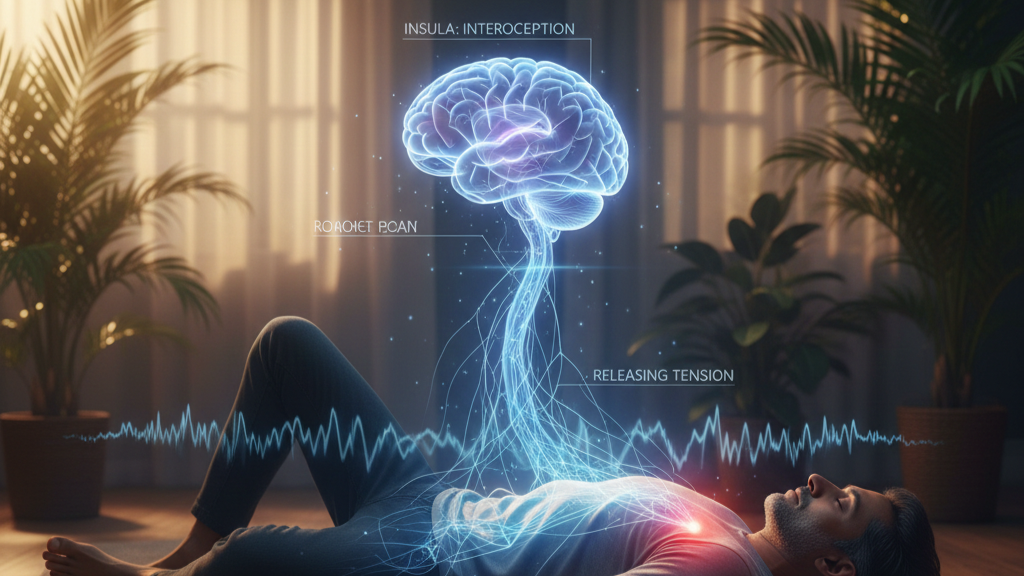
When you direct attention to a body part without trying to change what you feel, you activate the insula — the brain region responsible for interoception (internal body awareness). Regular insula activation improves your ability to read your body's signals: distinguishing real pain from tension, recognising tiredness before exhaustion, noticing hunger before it becomes ravenous.
For pain, body scanning changes the brain's pain processing. Research shows that meditators who practise body awareness develop altered activity in the somatosensory cortex — they still feel pain, but their emotional reaction to it decreases.[1] The sensation stays; the suffering diminishes.
For sleep, body scanning works because it systematically engages then releases muscle groups, triggering the parasympathetic 'rest and digest' response. It also redirects attention from the thought patterns that keep you awake (tomorrow's worries, today's regrets) to neutral physical sensations.
The Complete Technique (15 Minutes)
Setup (1 minute)
Lie on your back on a bed or mat. Arms at your sides, palms up. Legs uncrossed, feet falling naturally apart. Close your eyes. Take 5 deep breaths to settle.
Feet and Legs (4 minutes)
Bring attention to the soles of your feet. Notice temperature, pressure, tingling — whatever is there. Don't look for anything specific. Spend 30 seconds on each area: soles, tops of feet, ankles, lower legs, knees, upper legs, hips. As you move on from each area, imagine releasing it — letting it sink into the surface beneath you.
Torso (4 minutes)
Lower back. Notice the curve and contact with the surface. Upper back and shoulder blades. Stomach — notice the rise and fall of breath here. Chest. Ribcage expanding and contracting. Each area gets 30-40 seconds of pure attention.
Arms and Hands (3 minutes)
Shoulders (where most people hold tension — spend extra time here). Upper arms. Elbows. Forearms. Wrists. Palms. Each finger individually. Many people feel tingling or warmth in their hands during this phase — a sign of increased blood flow from nervous system relaxation.
Head and Face (2 minutes)
Back of neck. Scalp. Forehead (consciously relax the muscles above your eyebrows). Eyes (let them rest heavy in their sockets). Cheeks. Jaw (let your teeth part slightly). Tongue (let it rest on the floor of your mouth). Lips.
Whole Body (1 minute)
Expand awareness to your entire body simultaneously. Feel the whole body as one unified sensation. Breathe. Rest here.
Body Scan for Chronic Pain
If you have chronic pain, the instinct is to avoid the painful area during a body scan. Research suggests the opposite approach: spend more time on painful areas, but with a specific attitude — curiosity rather than aversion.
When you reach the painful area, ask: What exactly does this sensation feel like? Is it sharp or dull? Constant or pulsing? Does it have edges or is it diffuse? Is it the same right now as it was 30 seconds ago?
This investigative attention disrupts the pain-fear cycle. Pain generates fear, fear generates muscle tension, tension increases pain. Curious observation breaks the cycle at the fear stage.
Body Scan for Sleep
Use the same technique in bed. Start at your feet. Move slowly upward. The key modification: at each body area, consciously 'let go' of the muscles. Feel them become heavy. Most people fall asleep somewhere between the torso and head phases — which is exactly the point.
If you reach the top and are still awake, start again from the feet. The second pass usually does it.
For general information only, not a substitute for professional medical care. In a crisis or severe symptom onset, consult a qualified healthcare provider immediately.