In This Article
Starting yoga feels intimidating — Instagram feeds full of impossible backbends, studios where everyone seems to know what they're doing, and Sanskrit words you can't pronounce. But here's the truth: yoga was designed for beginners. The entire practice is about meeting yourself where you are, not where you think you should be.
You don't need flexibility, fitness, or any experience. You need a floor and 20 minutes. This guide gives you everything to start practising at home today.
What Is Yoga, Really?
Yoga is a mind-body practice combining physical postures (asanas), breathing techniques (pranayama), and awareness. It originated in India over 5,000 years ago, but the version most Westerners practise focuses on the physical postures and their mental benefits.
What makes yoga different from exercise is the attention component. You're not just moving your body — you're paying attention to how it feels, coordinating movement with breath, and training your mind to stay present. This is why yoga reduces anxiety and stress so effectively — it's meditation in motion.
Try Our Free 30-Second Emergency Sigh
The fastest science-backed way to lower heart rate: double inhale through nose, long exhale through mouth. Runs 100% privately in your browser with zero sign-up.
Open 30-Second Emergency Sigh →Types of Yoga for Beginners
Hatha Yoga — Best Starting Point
Slow-paced, one pose at a time, with clear instruction. Hatha classes hold poses for several breaths, giving you time to find alignment. This is where most beginners should start.
Vinyasa (Flow) Yoga — Once You Know the Basics
Links poses together in flowing sequences synchronised with breath. More dynamic than Hatha. Start here after 2-4 weeks of Hatha practice.
Restorative Yoga — For Stress Relief
Passive poses held for 5-10 minutes with props (blankets, bolsters). Deeply relaxing, perfect for stress relief and recovery. No flexibility required.
Yin Yoga — For Deep Stretching
Poses held for 3-5 minutes targeting connective tissue. Slow and meditative. Excellent complement to other exercise.
Chair Yoga — For Limited Mobility
Modified poses done seated or using a chair for support. Ideal for office workers, seniors, or anyone with mobility limitations.
10 Essential Beginner Poses
1. Mountain Pose (Tadasana)
Stand tall, feet hip-width apart, arms at sides. Press through all four corners of your feet. Engage your thighs. Roll shoulders back and down. This is your foundation — the alignment you'll return to in every standing pose.
2. Downward-Facing Dog (Adho Mukha Svanasana)
From hands and knees, lift hips up and back into an inverted V shape. Hands shoulder-width, feet hip-width. Bend your knees if needed — straight legs are not the goal. Press the floor away with your hands.
3. Child's Pose (Balasana)
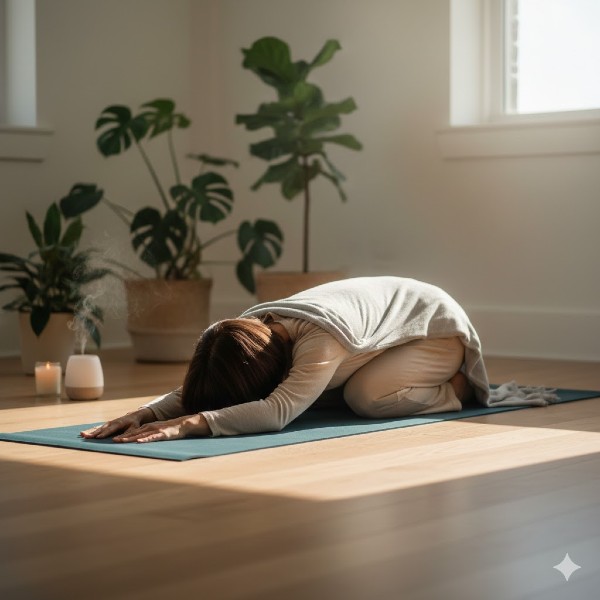
Kneel, sit back on your heels, fold forward with arms extended. Your resting pose — come here whenever you need a break. No one judges you for taking Child's Pose in any class.
4. Cat-Cow (Marjaryasana-Bitilakasana)
On hands and knees, alternate between arching your back (cow — belly drops, chest lifts) and rounding it (cat — spine curves up, chin tucks). Move with breath: inhale for cow, exhale for cat.
5. Warrior I (Virabhadrasana I)
Step one foot forward into a lunge, back foot angled 45 degrees. Bend front knee over ankle. Arms reach overhead. Builds strength in legs and opens the chest.
6. Warrior II (Virabhadrasana II)
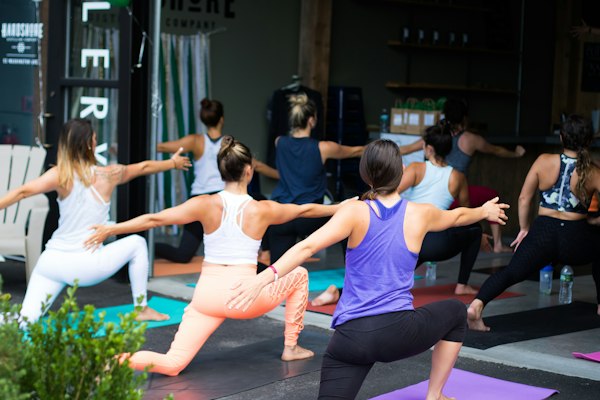
From Warrior I, open hips and arms to the side. Front knee bent, back leg straight. Gaze over your front hand. The quintessential yoga pose — builds strength, stability, and focus.
7. Tree Pose (Vrksasana)
Stand on one leg, place the other foot on your inner calf or thigh (never the knee). Hands at heart centre or overhead. Your first balance pose — wobbling is part of the practice.
8. Bridge Pose (Setu Bandhasana)
Lie on your back, feet flat, knees bent. Press through your feet to lift hips. Opens the chest, strengthens the back, and counteracts sitting all day.
9. Seated Forward Fold (Paschimottanasana)
Sit with legs extended. Hinge at hips and reach toward your feet. Doesn't matter if you can touch your toes — you'll feel the stretch in your hamstrings wherever you are.
10. Corpse Pose (Savasana)
Lie flat on your back, arms at sides, palms up. Close your eyes. Do nothing for 5 minutes. This is the most important pose in yoga — it integrates everything you've practised. Never skip it.
Best for Beginners: Alo Moves
Structured beginner yoga courses with world-class teachers. Follow along at home with HD video.
Start 14-Day Free Trial →Affiliate link — we earn a commission at no extra cost to you
Your First 20-Minute Routine
- Mountain Pose — 1 minute. Set your intention. Connect with breath.
- Cat-Cow — 2 minutes. Warm up the spine. 8-10 rounds.
- Downward Dog — 1 minute. Hold for 5 breaths. Pedal your feet.
- Warrior I — 2 minutes. 5 breaths each side.
- Warrior II — 2 minutes. 5 breaths each side.
- Tree Pose — 2 minutes. 5 breaths each side.
- Bridge Pose — 2 minutes. Hold for 5 breaths, repeat 3 times.
- Seated Forward Fold — 2 minutes. Hold for 10 breaths.
- Child's Pose — 1 minute. Rest and breathe.
- Savasana — 5 minutes. Close your eyes. Let everything go.
Practise this 3-4 times per week. After 2 weeks, you'll notice improved flexibility, reduced tension, and better sleep.
Common Beginner Mistakes
- Comparing yourself to others — yoga is non-competitive by design. Your practice is yours alone.
- Holding your breath — if you're not breathing, you're just stretching. Breath is the practice.
- Pushing into pain — discomfort is fine, sharp pain is not. Back off immediately if something hurts.
- Skipping Savasana — it feels like doing nothing, but it's where your nervous system integrates the practice.
- Expecting immediate flexibility — flexibility comes over weeks and months, not minutes. Consistency over intensity.
Equipment You Need
Essential: A yoga mat ($20-60). That's it.
Helpful: Two yoga blocks ($10-15) for supported poses. A strap ($8-12) for tight hamstrings.
Nice to have: A bolster for restorative yoga. A blanket for padding and warmth in Savasana.
Don't buy premium equipment until you've been practising regularly for a month. A basic mat and your body weight are enough.
Best Yoga Apps for Beginners
| App | Best For | Price | |
|---|---|---|---|
| Alo Moves | HD video courses, world-class teachers | $14/mo | Try Free → |
| Yoga With Adriene | Free YouTube courses (30-day challenges) | Free | Watch Free → |
| Down Dog | AI-generated custom flows | $9.99/mo | Try Free → |
| Peloton | Yoga + fitness in one subscription | $12.99/mo | Try Free → |
See our full best yoga apps guide for detailed reviews and comparisons.
Take Our Free Anxiety & Wellness Self-Assessment
Check your stress levels and get matched to the right relaxation exercises for your mood.
Start Free Assessment →FAQs
I'm not flexible — can I do yoga?
Absolutely. Saying you're too inflexible for yoga is like saying you're too dirty to take a bath. Yoga develops flexibility; it doesn't require it.
How often should I practise?
3-4 times per week is ideal for beginners. Even once a week produces benefits. Daily practice of 15-20 minutes is better than one 90-minute session per week.
Can yoga help with anxiety?
Significantly. Research shows yoga reduces cortisol, activates the parasympathetic nervous system, and improves emotional regulation.[1] See our yoga for anxiety guide for specific sequences.
Should I combine yoga with meditation?
Highly recommended. Yoga prepares the body for stillness, making meditation easier and more comfortable. Many practitioners do 20 minutes of yoga followed by 10-15 minutes of sitting meditation.
Related Articles
Sources & References
- [1] International Journal of Yoga / PubMed — Exploring the Therapeutic Effects of Yoga on Complex Stress and Mental Health
- [2] Journal of Alternative and Complementary Medicine — Effects of Yoga on Anxiety and Depression: Systematic Review
- [3] Harvard Health Publishing — Yoga for Anxiety and Depression: How it Helps Calm the Nervous System
For general information only, not a substitute for professional medical care. In a crisis or severe symptom onset, consult a qualified healthcare provider immediately.