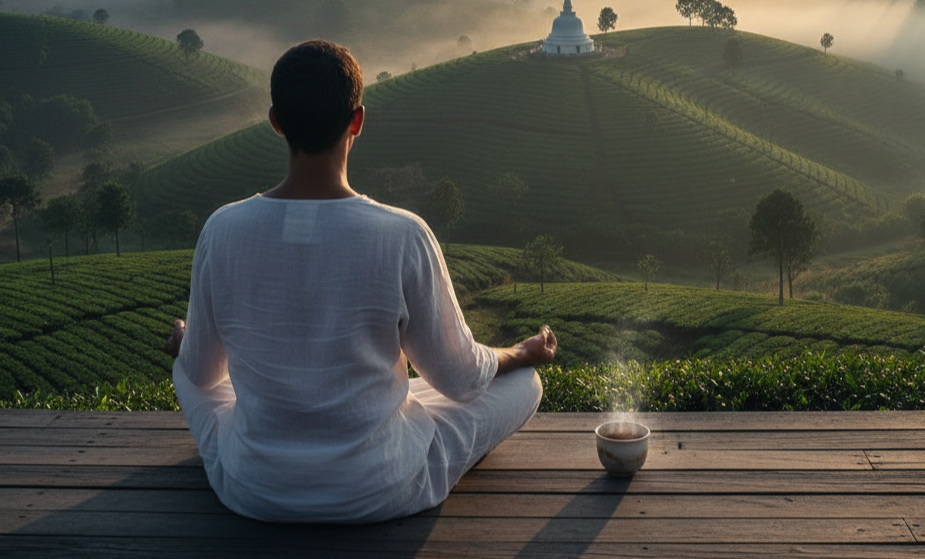
Kandy to Nilambe: A Meditator's Journey Into the Sri Lankan Hills
InnerCalmGuide·Feb 24, 2026·3 min read
The journey begins in Kandy — Sri Lanka's cultural capital, city of the Sacred Tooth Relic, ringed by green hills and buzzing with tuk-tuks. From the bus station, you catch a local bus heading toward Galaha. The city falls away. The road climbs. Tea plantations appear. The air cools. Mist gathers. After 90 minutes, the bus stops at a junction and you walk the final 3 kilometres uphill through tea estates and forest to Nilambe Meditation Centre — one of the world's most beautiful places to meditate.
Arriving at Nilambe
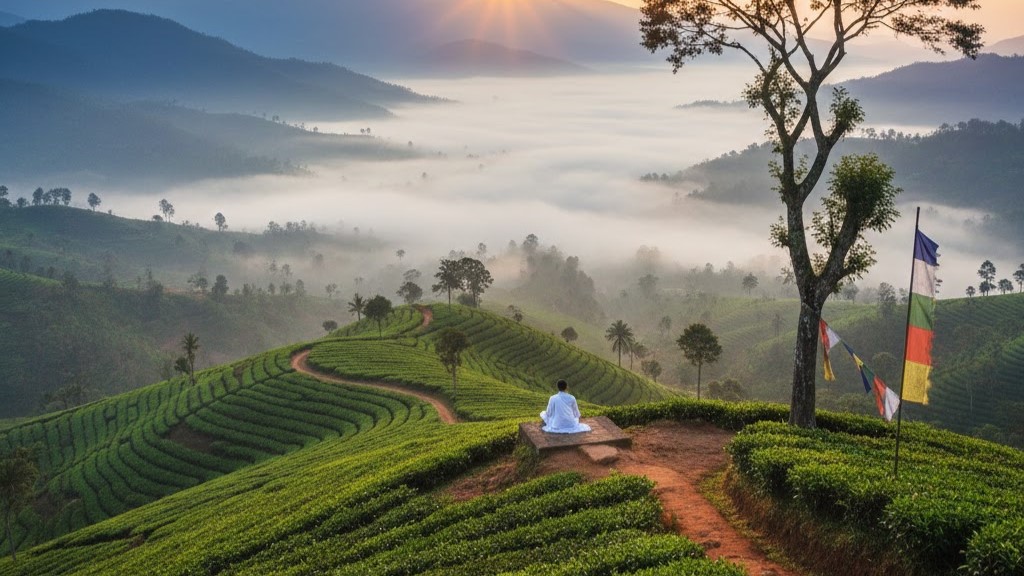
Nilambe sits at approximately 1,000 metres elevation, surrounded by hill country forest. The centre is simple: a meditation hall with panoramic mountain views, dormitory rooms, a kitchen, a small library, and scattered outdoor meditation spots among the trees. There is no luxury here. Also no pretension. Just a serious commitment to practice in a stunningly beautiful setting.
You arrive, register (a notebook at the office — no online booking system), choose a bed in the dormitory, change into comfortable clothes, and wait for the evening meditation bell. That's it. You've begun.
The Daily Schedule
4:45 AM: Wake-up bell. The mountain air is cold — bring a warm layer. Walk to the meditation hall in the dark, guided by the path and the stars above tea country.
5:30 AM: Morning meditation (45 minutes). Sitting in silence as dawn light gradually fills the hall. Through the windows, clouds move through the valley below. Birds begin calling in the forest.
6:30 AM: Yoga (1 hour). Gentle hatha yoga suitable for all levels. The yoga at Nilambe is preparation for meditation, not exercise — stretching, breathing, and body awareness.
7:30 AM: Breakfast. Simple vegetarian fare — hoppers, rice, dhal, fruit, tea. Eaten in silence or quiet conversation.
8:30 AM: Working meditation. Everyone contributes — gardening, cleaning, kitchen help. This is formal practice: mindfulness applied to physical labour. The garden work at Nilambe, surrounded by mountain views, is meditation in its purest form.
10:30 AM: Sitting meditation.
12:00 PM: Lunch. The main meal — rice and curry, vegetables from the garden, fruit.
2:00 PM: Dhamma talk or discussion (in English). Topics range from Buddhist philosophy to practical meditation guidance to open Q&A with the teacher.
3:30 PM: Walking meditation or free practice. Many meditators walk the forest paths around the centre, practising cankama (walking meditation) with mountain views.
5:00 PM: Tea and light refreshment.
5:30 PM: Evening meditation. As darkness falls over the hills, the quality of the silence deepens.
7:00 PM: Chanting and final meditation.
8:00 PM: Free time. Most people read, journal, or sit outside watching stars before sleeping.
What to Expect
Days 1-2: Physical adjustment. The schedule is early. The beds are basic. The food is simple. Your phone doesn't work well (limited signal — which is a gift). Your mind is noisy with the residue of ordinary life.
Days 3-4: Mental resistance peaks. Boredom, restlessness, doubt ('why am I here?'), and physical discomfort from sitting. This is normal. Every meditator at Nilambe goes through this. The teachers know. The schedule holds you.
Days 5-7: Something shifts. The noise quietens. The schedule becomes natural. You notice things — the exact colour of the sky at 5:30 AM, the sound of a specific bird, the taste of tea as though you've never tasted it before. Meditation sessions deepen. The body relaxes. The mind starts to reveal itself.
Practical Information
Getting there: Bus from Kandy to Galaha junction (90 min, ~LKR 100). Then 3 km walk uphill or tuk-tuk (LKR 500-800).
For general information only, not a substitute for professional medical care. In a crisis or severe symptom onset, consult a qualified healthcare provider immediately.
.png)