In This Article
Yoga is one of the most effective stress management tools available — and it works differently from both exercise and meditation alone. Where running burns off adrenaline and meditation calms the mind, yoga does both simultaneously whilst adding the unique benefit of releasing stored physical tension.
Research consistently shows yoga reduces cortisol levels, lowers blood pressure, improves heart rate variability, and decreases perceived stress more effectively than many other interventions.[1] Here's how to use it.
How Yoga Reduces Stress
- Vagus nerve activation — slow breathing and forward folds stimulate the vagus nerve, directly activating the "rest and digest" response
- Cortisol reduction — studies show 60 minutes of yoga reduces cortisol by 15-25%. Even 20 minutes produces measurable drops
- Muscle tension release — stress lives in the body (tight shoulders, clenched jaw, compressed hips). Yoga systematically releases these holding patterns
- Present-moment focus — coordinating breath with movement interrupts the stress-worry cycle
- HRV improvement — regular yoga practice improves heart rate variability, a key biomarker of stress resilience
Looking for Professional Support Beyond Self-Help?
Self-help tools and guides are great for daily calm, but combining mindfulness with professional CBT therapy is proven to provide long-term anxiety and stress relief. Online-Therapy.com pairs you with a personal licensed therapist, daily worksheets, audio guides, and journaling tools from $48/week (20% off first month).
Explore Online Therapy (20% Off) →Affiliate link — we earn a commission at no extra cost to you
Featured Mindful.org Official Online Courses & Training
Deepen your daily mindfulness and meditation practice with certified online courses led by world-renowned teachers at Mindful.org:


Official Mindful.org Partner · Self-Paced Online Training
Try Our Free Guided Breathing Tool
Interactive breathing pacer for box breathing, 4-7-8, and coherent breathing. Runs 100% privately in your browser with zero sign-up.
Open Guided Breathing Tool →25-Minute Stress Relief Routine
- Child's Pose with breathing (3 min) — Forehead on mat, arms extended. 4-count inhale, 8-count exhale.
- Cat-Cow (2 min) — Slow, fluid rounds. Close your eyes. Feel each vertebra.
- Downward Dog (2 min) — Pedal feet, shake head "yes" and "no." Release neck tension.
- Low Lunge + Twist (each side) (3 min) — Deep hip opening. Twist releases the mid-back.
- Warrior II (each side) (2 min) — Ground through your legs. Find strength in stillness.
- Wide-Legged Forward Fold (2 min) — Head below heart. Blood flows to the brain. Deeply calming.
- Pigeon Pose (each side) (4 min) — The #1 hip opener for stress. Emotions often surface here — let them.
- Bridge Pose (2 min) — 3 rounds. Opens the chest. Counteracts the hunched "stress posture."
- Supine Twist (each side) (2 min) — Final tension release in the spine.
- Savasana (3 min) — Deep rest. Let the body absorb everything you've practised.
Best Stress-Relieving Poses
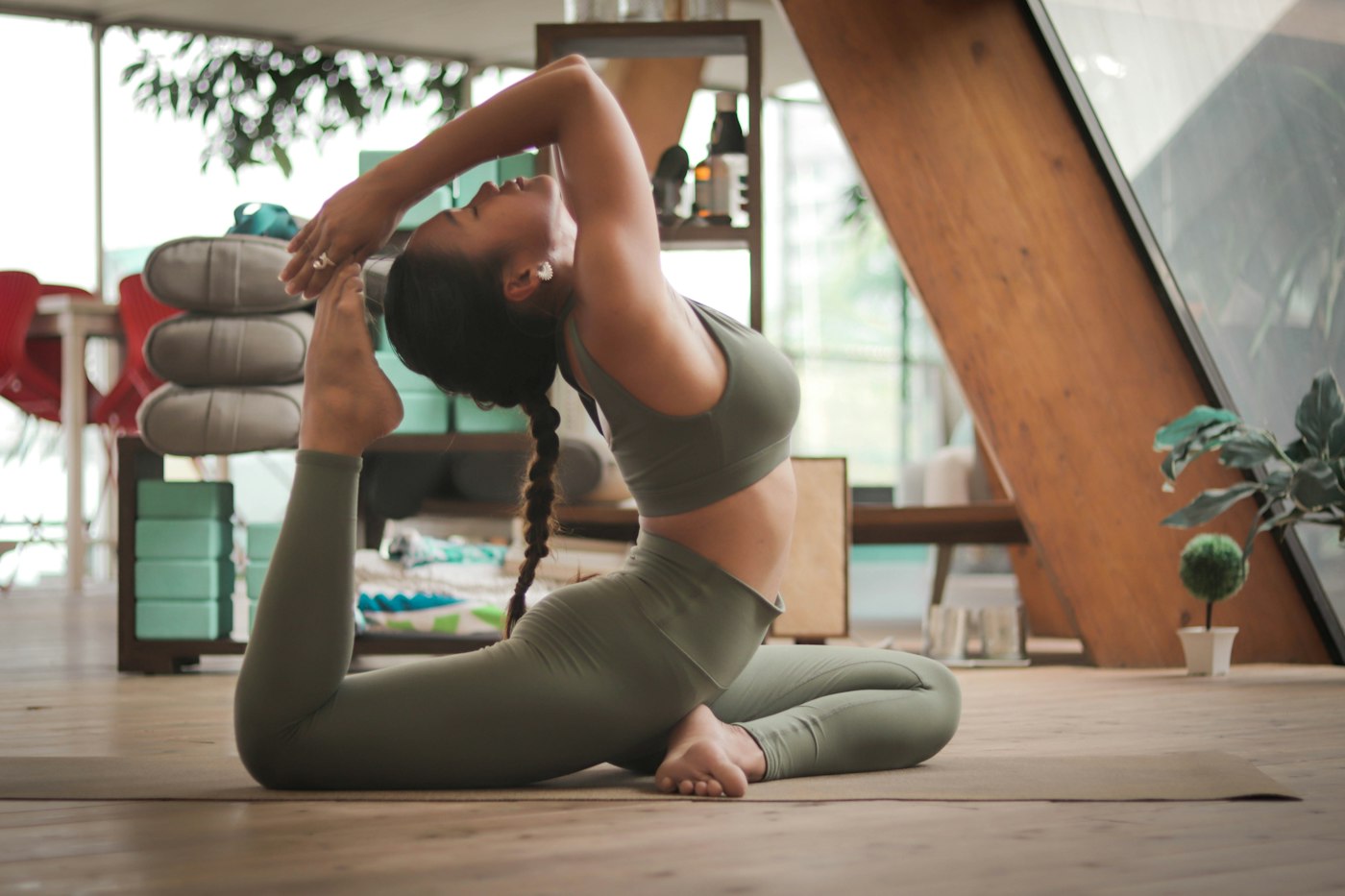
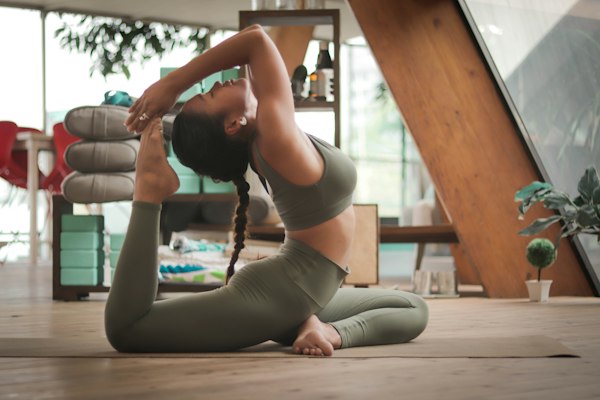
Pigeon Pose (Eka Pada Rajakapotasana)
The hips are the body's emotional storage centre. Pigeon pose creates a deep external hip rotation that releases tension accumulated from sitting, stress, and emotional holding. Hold for 2-3 minutes per side. Don't be surprised if emotions surface — this is normal and therapeutic.
Legs Up the Wall (Viparita Karani)
The simplest, most effective stress-relief pose. Lie on your back with legs resting vertically on a wall. Calms the nervous system within minutes. Stay 5-15 minutes.
Forward Folds (Standing or Seated)
Any forward fold compresses the abdomen, stimulates the vagus nerve, and signals safety to the nervous system. Let your head hang heavy — the weight of the skull provides gentle traction for the cervical spine.
Supported Fish Pose
Place a bolster or rolled blanket lengthwise under your spine. Lie back with arms open. This gentle heart opener counteracts the physical posture of stress (rounded shoulders, collapsed chest) and creates a profound sense of vulnerability and release.
Stress Relief on Alo Moves
Dedicated stress relief courses. Restorative, yin, and gentle flow classes from world-class teachers.
Start 14-Day Free Trial →Affiliate link — we earn a commission at no extra cost to you
Yoga Breathing (Pranayama) for Stress
Extended Exhale
Inhale for 4 counts, exhale for 8 counts. The extended exhale activates the parasympathetic nervous system. This is the single fastest way to reduce stress through breath. See our breathing exercises guide.
Nadi Shodhana (Alternate Nostril Breathing)
Close the right nostril, inhale through the left. Close the left, exhale through the right. Inhale right, exhale left. This balances the nervous system and creates a calm, centred state. 5 minutes is sufficient.
Ujjayi Breath (Ocean Breath)
Gently constrict the back of the throat to create a soft ocean-like sound on both inhale and exhale. Used throughout vinyasa yoga. The audible breath provides a focus point and the slight resistance triggers the relaxation response.
Best Yoga Styles for Stress
- Restorative Yoga — passive poses with full prop support. Maximum stress relief with minimum effort. The #1 style for chronic stress and burnout.
- Yin Yoga — deep, slow stretching held for 3-5 minutes. Targets connective tissue and fascia. Meditative and deeply calming.
- Gentle Hatha — slow-paced with clear instruction. Good balance of movement and stillness.
- Vinyasa Flow (moderate pace) — rhythmic movement synchronised with breath. The flowing nature can be meditative. Avoid power/hot vinyasa if already stressed.
Best Apps for Stress-Relief Yoga
| App | Stress Content | Price | |
|---|---|---|---|
| Alo Moves | Restorative, yin, and stress-specific courses | $14/mo | Try Free → |
| Down Dog | "Restorative" and "Yin" style options | $9.99/mo | Try Free → |
| Headspace | Yoga + meditation for stress | $69.99/yr | Try Free → |
Take Our Free Anxiety & Wellness Self-Assessment
Check your stress levels and get matched to the right relaxation exercises for your mood.
Start Free Assessment →FAQs
How quickly does yoga reduce stress?
A single session produces immediate cortisol reduction. Regular practitioners (3+ times/week) show significant baseline stress reduction after 4-8 weeks. The effects are cumulative — the more you practise, the more resilient you become.
Is yoga or meditation better for stress?
Both are excellent, and they work through different mechanisms. Yoga is better for physical tension and nervous system regulation. Meditation is better for mental rumination and emotional reactivity. The ideal approach combines both.
Can I do yoga at work for stress?
Yes — see our chair yoga for office workers guide and meditation for work stress for desk-friendly practices.
Related Articles
Sources & References
- [1] International Journal of Yoga / PubMed — Exploring the Therapeutic Effects of Yoga on Complex Stress and Mental Health
- [2] Journal of Alternative and Complementary Medicine — Effects of Yoga on Anxiety and Depression: Systematic Review
- [3] Harvard Health Publishing — Yoga for Anxiety and Depression: How it Helps Calm the Nervous System
For general information only, not a substitute for professional medical care. In a crisis or severe symptom onset, consult a qualified healthcare provider immediately.