In This Article
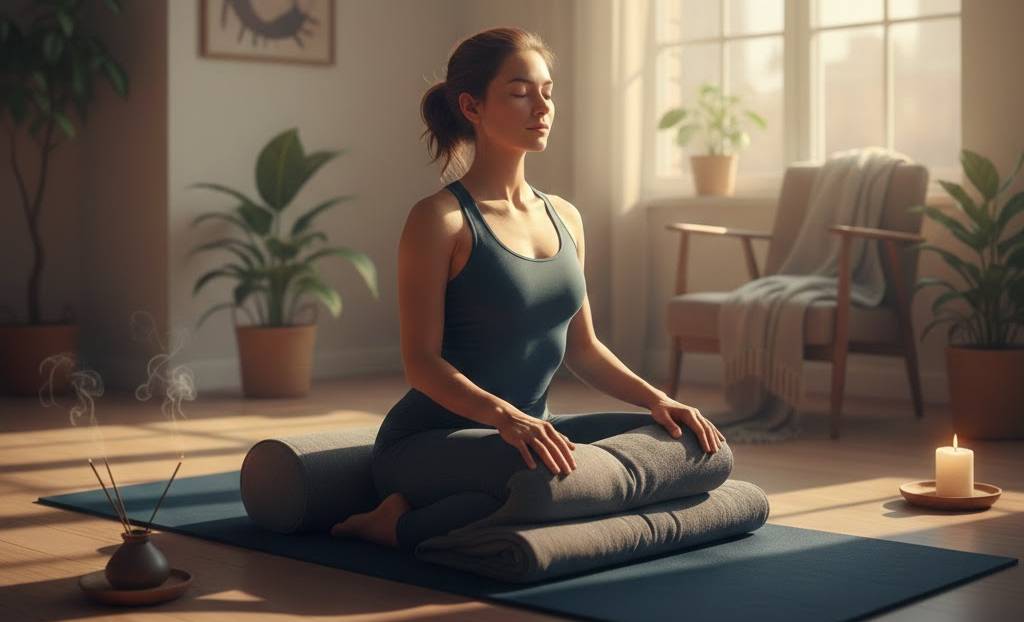
Yin yoga is the slow lane of yoga — and in a world that's always accelerating, slow might be exactly what you need. Where vinyasa flows and power yoga build heat and strength, yin works in the opposite direction: long, passive holds (3-5 minutes per pose) that target the deep connective tissues — fascia, ligaments, and joints — that active yoga doesn't reach.
The result is a practice that's part deep stretching, part meditation, and entirely relaxing.
What Is Yin Yoga?
Yin yoga was developed by Paul Grilley and Sarah Powers, drawing on Chinese meridian theory and modern anatomy. The practice follows three principles:
- Come to your appropriate edge — find the first point of resistance in the stretch. Don't push past it.
- Be still — once in the pose, stop adjusting. Stillness allows the deep tissues to gradually release.
- Hold for time — 3-5 minutes per pose. The duration is what makes yin unique — it takes 90-120 seconds before connective tissue begins to respond.
Try Our Free Sleep Routine Builder
Build a custom bedtime wind-down routine tailored to your available time (5 to 30 mins). Runs 100% privately in your browser with zero sign-up.
Open Sleep Routine Builder →The Science of Long Holds
- Fascial release — fascia (the web of connective tissue surrounding muscles and organs) becomes stiff and dehydrated under stress. Long holds rehydrate and release fascial adhesions.
- Joint health — gentle sustained stress on ligaments and joint capsules maintains their health and range of motion — "use it or lose it" for joints.
- Parasympathetic activation — the combination of stillness, breathing, and mild sensation creates deep nervous system relaxation.
- Mindfulness training — holding an uncomfortable position for minutes while maintaining equanimity is essentially vipassana meditation with a physical component.
8 Essential Yin Yoga Poses
1. Butterfly (Baddha Konasana)
Seated, soles of feet together, fold forward. Targets inner thighs, groin, and lower back. Hold 3-5 min.
2. Dragon (Low Lunge)
Deep lunge with back knee down. The #1 yin pose for hip flexors — the muscle group most affected by sitting. Hold 3-5 min each side.
3. Caterpillar (Seated Forward Fold)
Legs straight, fold forward. Round the spine (unlike active yoga where you lengthen). Targets the entire back body. Hold 3-5 min.
4. Sleeping Swan (Pigeon)
Pigeon pose with torso folded forward over the front shin. Deep external hip rotation. Hold 3-5 min each side. Emotions often surface here.
5. Sphinx/Seal
Lie on belly, prop on forearms (sphinx) or hands (seal). Gentle backbend targeting the lumbar spine. Hold 3-5 min.
6. Banana Pose
Lie on back. Shift hips right, walk feet and upper body left — creating a banana curve. Stretches the entire side body and IT band. Hold 3-5 min each side.
7. Twisted Roots
Lie on back, cross one knee over the other, drop both to one side. A deep twist that releases the spine and hip rotators. Hold 3-5 min each side.
8. Legs Up the Wall
The classic yin finisher. Legs vertical on a wall. Hold 5-10 min. Drains lymphatic fluid and deeply calms the nervous system.
Yin Yoga on Alo Moves
Beautiful yin yoga courses with expert teachers. 30-60 min sessions for deep release.
Start 14-Day Free Trial →Affiliate link — we earn a commission at no extra cost to you
40-Minute Yin Routine for Relaxation
- Butterfly — 5 min
- Dragon (right side) — 4 min
- Dragon (left side) — 4 min
- Caterpillar — 5 min
- Sleeping Swan (right) — 4 min
- Sleeping Swan (left) — 4 min
- Sphinx — 4 min
- Twisted Roots (each side) — 3 min per side (6 min)
- Savasana — 4 min
Use a timer. Move slowly between poses — the transitions are part of the practice. Breathe naturally throughout.
Yin vs Restorative: Key Differences
| Aspect | Yin Yoga | Restorative Yoga |
|---|---|---|
| Sensation | Moderate stretch (working edge) | No stretch (complete comfort) |
| Props | Minimal (blocks optional) | Extensive (bolsters, blankets) |
| Target | Connective tissue + fascia | Nervous system only |
| Hold time | 3-5 minutes | 5-15 minutes |
| Physical benefit | Flexibility + joint health | Pure relaxation |
| Best for | Flexibility, athletes, meditators | Burnout, insomnia, stress |
Best Apps for Yin Yoga
| App | Yin Content | Price | |
|---|---|---|---|
| Alo Moves | Premium yin courses + individual classes | $14/mo | Try Free → |
| Glo | Largest yin library (150+ classes) | $18/mo | Try Free → |
| Down Dog | "Yin" style option with custom timing | $9.99/mo | Try Free → |
Take Our Free Anxiety & Wellness Self-Assessment
Check your stress levels and get matched to the right relaxation exercises for your mood.
Start Free Assessment →FAQs
Is yin yoga good for beginners?
Yes — the slow pace and simple poses make it very accessible. The challenge is mental (staying still for minutes) not physical. Beginners often find yin easier than vinyasa.
Can yin yoga improve flexibility?
Significantly. The long holds target deep connective tissue that stretching and active yoga miss. Most practitioners see noticeable flexibility gains within 4-6 weeks of regular practice (2-3 sessions/week).
When should I do yin yoga?
Evening is ideal — the calming effects prepare you for sleep. It's also excellent after intense exercise as active recovery. Avoid doing yin immediately before activities requiring explosive power.
Related Articles
Sources & References
- [1] International Journal of Yoga / PubMed — Exploring the Therapeutic Effects of Yoga on Complex Stress and Mental Health
- [2] Journal of Alternative and Complementary Medicine — Effects of Yoga on Anxiety and Depression: Systematic Review
- [3] Harvard Health Publishing — Yoga for Anxiety and Depression: How it Helps Calm the Nervous System
For general information only, not a substitute for professional medical care. In a crisis or severe symptom onset, consult a qualified healthcare provider immediately.