Dana: The Sri Lankan Practice of Generosity as Meditation
InnerCalmGuide·Feb 24, 2026·3 min read
In the West, meditation begins with sitting. In Sri Lanka, it begins with giving. Dana (Pali for 'generosity') is the first of the ten paramitas (perfections) in Theravada Buddhism, and Sri Lankan culture is built on it. Before you learn to watch your breath, you learn to open your hand.
Why Dana Comes First
The Buddha taught dana before meditation for a practical reason: a mind consumed by clinging, greed, and attachment cannot concentrate. Generosity directly weakens attachment — every act of giving is a small act of letting go. By the time a Sri Lankan Buddhist sits down to meditate, they've already practised letting go through dana dozens of times that week.
Dana also generates mudita (sympathetic joy) — the happiness that comes from making others happy. This positive mental state creates ideal conditions for meditation. A mind full of the warmth generated by generosity settles into concentration more easily than a mind preoccupied with accumulation.
How Dana Is Practised in Sri Lanka
Alms Giving (Sanghika Dana)
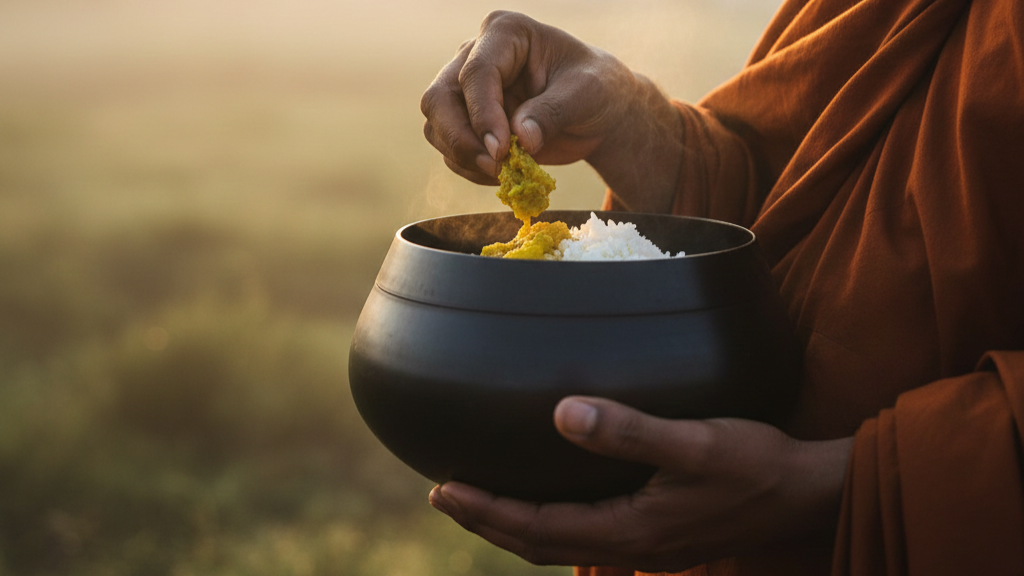
The most visible form of dana is offering food to monks. Every morning across Sri Lanka, laypeople prepare food and offer it to monks during the alms round (pindapata) or at the temple. This isn't a transaction — monks don't bless the food or offer services in return. The act of giving itself is the practice. The giver benefits from the generosity; the monk benefits from the sustenance.
Dansala (Free Food Stalls)
On Poya days and holidays, communities set up dansala — roadside stalls offering free food to anyone. Rice, curry, kiribath, ice cream, tea — all given freely. Families spend significant resources on dansala, considering it an investment in spiritual merit. The practice is joyful — families cook together, serve strangers together, and clean up together.
Temple Offerings
Flowers, incense, oil lamps, and food are offered at temples daily. Each offering has meditative significance: flowers represent impermanence (they wilt), incense represents the fragrance of virtue, oil lamps represent the light of wisdom. The act of arranging flowers at a Buddhist shrine is itself a mindfulness practice — attention to beauty, impermanence, and devotion.
Daily Generosity
Beyond formal offerings, Sri Lankan culture embeds dana in daily life. Visitors to any Sri Lankan home are offered tea and food without question. Neighbours share harvests, children share lunch boxes, and strangers help each other without expectation of return. This isn't just hospitality — it's continuous dana practice.
Dana as Meditation
To practise dana as meditation, bring full mindfulness to the act of giving:
Before giving: Notice the intention to give. Notice any resistance ('I might need this,' 'this costs money,' 'will they appreciate it?'). Observe the resistance without acting on it. Let the generosity arise.
During giving: Give with full attention. Make eye contact. Notice the physical sensation of releasing something from your hand. Feel the lightness that follows letting go.
After giving: Notice the quality of mind after giving — the warmth, the lightness, the lack of regret. This is the fruit of dana. Don't cling to it; simply recognise it.
The Sri Lankan tradition teaches that a single act of dana performed with full mindfulness and pure intention generates more spiritual benefit than hours of mechanical meditation. The quality of attention matters more than the quantity of practice.
Practising Dana at Home
You don't need to be in Sri Lanka. Give something away every day — a compliment, your time, a meal, money, attention. The key is mindfulness: know you are giving while you give. Over time, the habit of generosity weakens attachment, builds compassion, and creates the mental conditions for deep meditation.
For general information only, not a substitute for professional medical care. In a crisis or severe symptom onset, consult a qualified healthcare provider immediately.