Meditation at Sigiriya: Mindfulness Among Ancient Ruins
InnerCalmGuide·Feb 24, 2026·3 min read
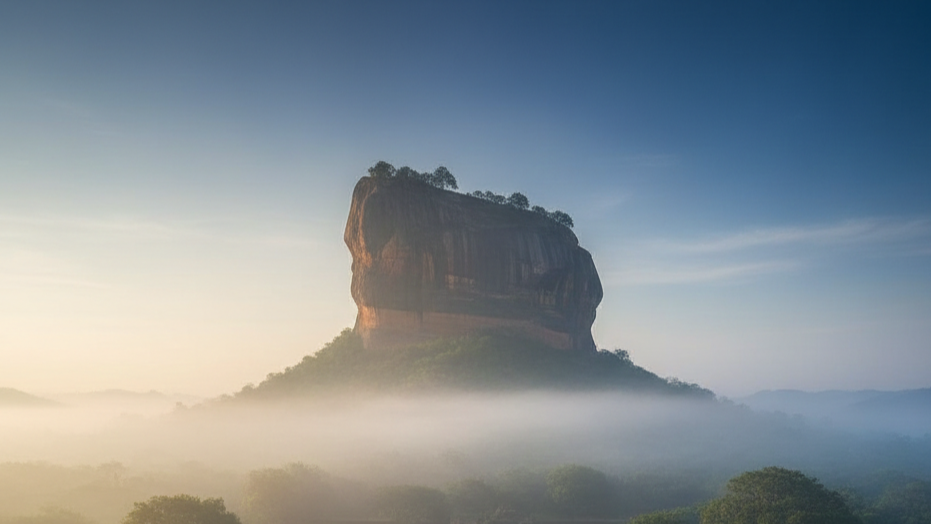
Most tourists climb Sigiriya for selfies. They miss the fact that this 5th-century rock fortress, rising 200 metres from the central Sri Lankan plain, was both a royal citadel and a Buddhist monastery. The rock was home to monks long before King Kashyapa built his palace on its summit — and monks returned after his reign ended. Meditation has been practised here for over 1,500 years.
The Monastic History
Before Kashyapa (477-495 CE), Sigiriya was a Buddhist monastery. Caves at the base of the rock, inscribed with donations dating to the 3rd century BCE, served as meditation cells for monks. After Kashyapa's death, the site reverted to a monastery and remained one for centuries. The famous mirror wall, the water gardens, and the summit ruins all exist within a space that was fundamentally designed for contemplation.
Mindful Exploration
Rather than rushing to the top, approach Sigiriya as a walking meditation through layers of history:
Water Gardens (Ground Level): Begin at the geometric water gardens — one of the oldest landscaped gardens in Asia. These were designed for contemplation. Walk slowly. Notice the symmetry. Listen to the water. The gardens employ principles of geometric harmony that naturally calm the mind. Spend 15 minutes here before climbing.
Boulder Gardens (Lower Slopes): Massive boulders, some with ancient inscriptions, line the approach. Several have flat surfaces that served as meditation platforms for monks. Find one. Sit for 5 minutes. Close your eyes. Feel the stone — warmed by centuries of tropical sun, cooled by monsoon rains.
Cave Hermitages: Along the base of the rock, shallow caves with drip ledges (carved to prevent rainwater from entering) were monks' meditation cells. Some retain traces of ancient paintings. Standing inside these caves, you're in the exact spaces where monks meditated 2,000+ years ago. The caves are cool, quiet, and naturally conducive to inward attention.
The Climb: The 1,200 steps to the summit are themselves a meditation. Feel each step. Notice the breath becoming heavier. Watch the landscape unfold. The physical effort creates a moving meditation that prevents the mind from wandering — your attention is naturally anchored in the body.
The Summit: At the top, the 360-degree panorama of central Sri Lanka is breathtaking. Before taking photos, sit for 5 minutes. Close your eyes. Feel the wind. Open your eyes slowly and take in the view with the same mindful attention you'd bring to a meditation session. The vastness of the landscape naturally produces a sense of spaciousness in the mind.
Practical Tips
Timing: Arrive at 6:30 AM when gates open. The site is nearly empty, the light is golden, and the temperature is bearable. By 9 AM, tour buses arrive and the contemplative atmosphere dissolves.
Pidurangala Rock: For a meditative experience without the crowds, climb Pidurangala Rock — a monastery site 1 km north of Sigiriya. Fewer tourists, a functioning Buddhist temple at the base, a reclining Buddha statue, and summit views of Sigiriya itself. Many meditators prefer Pidurangala to Sigiriya for practice.
Combine with retreat: Several meditation centres operate within 1-2 hours of Sigiriya. Visit the rock as a day trip during a longer retreat in the Cultural Triangle region.
For general information only, not a substitute for professional medical care. In a crisis or severe symptom onset, consult a qualified healthcare provider immediately.