Jhana Meditation: Sri Lanka's Path to Deep Absorption States
InnerCalmGuide·Feb 24, 2026·3 min read
Most Western meditation teaches you to observe your thoughts. Sri Lankan jhana practice teaches you to leave them behind entirely. Jhana (Pali for 'absorption') refers to progressively deeper states of concentration where the mind becomes completely unified with its meditation object — and ordinary mental activity ceases.
These aren't metaphors. Jhana practitioners report experiences so distinct from normal consciousness that neuroscientists have confirmed measurable differences in brain activity during jhana states. EEG readings show dramatic shifts in brainwave patterns that don't occur in ordinary mindfulness meditation.
What Are the Jhanas?
The Buddha described eight jhana levels, divided into four 'form' jhanas (rupa jhana) and four 'formless' jhanas (arupa jhana). Sri Lankan Theravada tradition preserves the complete system.
First Jhana
The mind locks onto its object (usually the breath) with sustained and applied attention. A powerful joy (piti) arises — sometimes experienced as waves of pleasure, tingling, lightness, or even laughter. Happiness (sukha) accompanies the joy. The five hindrances — desire, ill will, sloth, restlessness, and doubt — are temporarily suppressed. You know you've entered first jhana because the quality of experience is unmistakably different from ordinary meditation.
Second Jhana
The effort of maintaining concentration drops away. Attention becomes effortless — the mind rests in its object without 'trying.' Joy and happiness intensify. Internal confidence (sampasadana) arises. Many practitioners describe this as the first truly blissful state — concentration without struggle.
Third Jhana
Joy fades, replaced by a deep equanimous happiness. The excitement of the earlier jhanas settles into something calmer and more refined. The mind is incredibly still. This is often described as the most 'pleasant' jhana — happiness without the agitation of joy.
Fourth Jhana
Even happiness dissolves, replaced by perfect equanimity (upekkha). The breath may become imperceptible. The mind is crystal clear, perfectly balanced, and profoundly still. Pain disappears — the Buddha himself reportedly used fourth jhana during surgery. This state is the foundation for developing the supernormal powers (abhinna) described in Buddhist texts and the launching point for vipassana insight practice.
How Sri Lankan Masters Teach Jhana
In Sri Lanka, jhana is taught as an attainable, practical skill — not a theoretical concept reserved for monks. The approach is systematic and progressive:
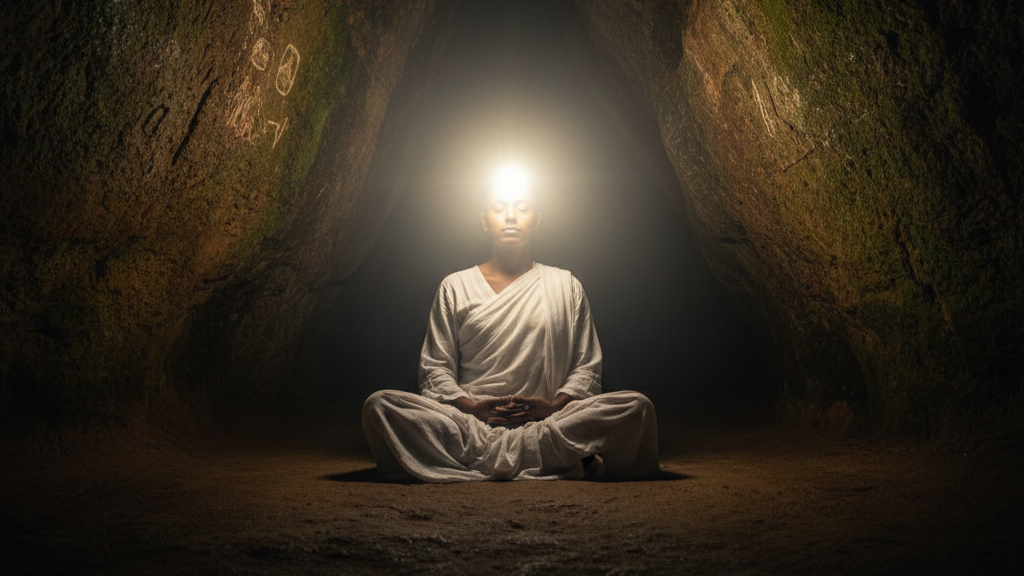
Foundation: Weeks or months of anapanasati (breath meditation) developing access concentration (upacara samadhi). The breath becomes very subtle — almost disappearing. A luminous mental image called the nimitta may appear.
Nimitta work: The nimitta (a light or visual sign that appears in concentrated meditation) is cultivated and stabilised. In the Sri Lankan Pa Auk tradition particularly, the nimitta is the gateway to jhana. When the nimitta becomes bright, stable, and attractive, the meditator absorbs into it — and jhana arises.
Progressive development: Each jhana is mastered before progressing to the next. 'Mastery' means being able to enter, remain in, and exit each jhana at will. Sri Lankan teachers are specific about what constitutes genuine jhana versus near-jhana states — there is no ambiguity.
Can Laypeople Attain Jhana?
Yes. Sri Lankan teachers are clear that jhana is available to dedicated laypeople, not just monks. The requirements are regular daily practice (minimum 1-2 hours), periodic retreat practice (minimum 7-10 days), moral conduct (sila) as a foundation, and qualified teacher guidance. Most laypeople who attain jhana do so during intensive retreat periods, then maintain access through daily practice. It typically requires months to years of dedicated effort — but the Sri Lankan tradition maintains that the jhanas are accessible to any sincere practitioner.
Why Jhana Matters
Beyond the extraordinary quality of the experience itself, jhana serves a practical purpose in the Buddhist path. The deeply concentrated mind of fourth jhana can be directed toward vipassana insight with unprecedented clarity. Insights into impermanence, suffering, and non-self that take ordinary meditators years to develop can arise rapidly from a jhana-concentrated mind.
The Buddha himself attained enlightenment from the base of jhana concentration. The Sri Lankan tradition preserves this integration of samatha and vipassana — calm and insight working together — as the complete path.
For general information only, not a substitute for professional medical care. In a crisis or severe symptom onset, consult a qualified healthcare provider immediately.