Meditation for Pregnancy: A Trimester-by-Trimester Guide
InnerCalmGuide·Apr 20, 2026·3 min read
Pregnancy is 40 weeks of constant change — physical, emotional, and hormonal. A meditation practice that works in month 2 may be uncomfortable by month 7. This guide adapts your practice as your body and mind evolve.
'
First Trimester: Managing Anxiety and Nausea
The first trimester is mentally loud — excitement mixed with worry, exhaustion, and often relentless nausea. Your body looks the same but feels completely different.
Best technique: Breath focus (5-10 minutes)
Sit or lie comfortably. Breathe in for 4 counts, out for 6. The extended exhale calms the vagus nerve, which helps both anxiety and nausea. If nausea is severe, focus on cool air entering your nostrils — this creates a sensory distraction from stomach discomfort.
Avoid: Body scan meditation. In early pregnancy, heightened body awareness can amplify nausea and anxiety about symptoms. Focus outward (breath, sounds) rather than inward.
Research shows mindfulness during early pregnancy reduces pregnancy-specific anxiety and may lower cortisol levels that affect foetal development.
Second Trimester: Building Connection
The second trimester often brings relief — nausea fades, energy returns, and the pregnancy feels more 'real.' This is an ideal time to deepen your practice.
Best technique: Baby connection meditation (10 minutes)
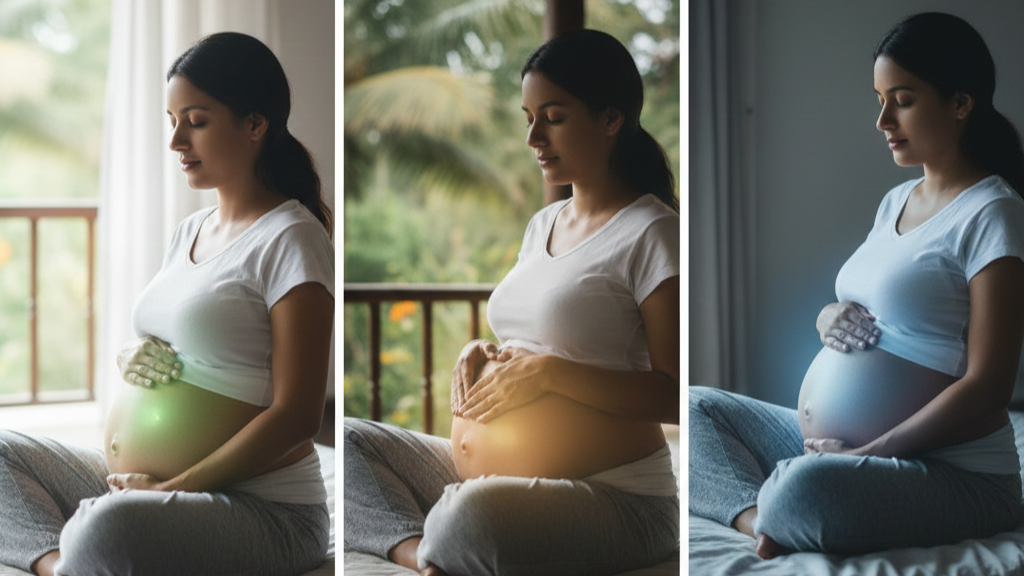
Sit comfortably with hands on your belly. Breathe slowly. Visualise your baby — their size, their movements, their growing form. Send warmth and love with each exhale. When thoughts intrude (will the birth go well? am I ready?), acknowledge them and return to connection.
Also try: Walking meditation. Your body still moves freely. Gentle walking with mindful attention to each step is both meditation and exercise.
Third Trimester: Preparing for Birth
The final stretch brings physical discomfort, sleep disruption, and birth anxiety. Meditation becomes both preparation and coping tool.
Best technique: Birth breathing (10-15 minutes)
Practise slow, deep abdominal breathing — in through the nose for 4, out through the mouth for 8. This is the breathing pattern that helps during contractions. Practising it daily means it becomes automatic under stress rather than something you have to remember.
Best position: Reclined with pillows supporting your back and sides, or on your left side. Traditional seated meditation may be uncomfortable with a full-term belly pressing on your diaphragm.
For sleep: Body scan meditation (yes, now it works — the anxiety about symptoms has been replaced by discomfort that body scanning helps address). Start at your feet, slowly relax each muscle group. Many women fall asleep before reaching their shoulders.
Postpartum: The Forgotten Trimester
The 'fourth trimester' is often the hardest mentally. Hormones crash. Sleep disappears. Identity shifts. See our article on meditation for new mothers for specific techniques.
Safety Notes
Meditation is safe throughout pregnancy. No positions or techniques are harmful. However, if lying flat causes dizziness (common in late pregnancy due to inferior vena cava compression), use a left-side position or recline at 45 degrees.
If you experience persistent anxiety, depression, or intrusive thoughts during pregnancy, speak with your midwife or GP. Perinatal mental health support is available and effective.
For general information only, not a substitute for professional medical care. In a crisis or severe symptom onset, consult a qualified healthcare provider immediately.