Meditation for Seniors: Cognitive Benefits and Easy Techniques
InnerCalmGuide·Apr 23, 2026·3 min read
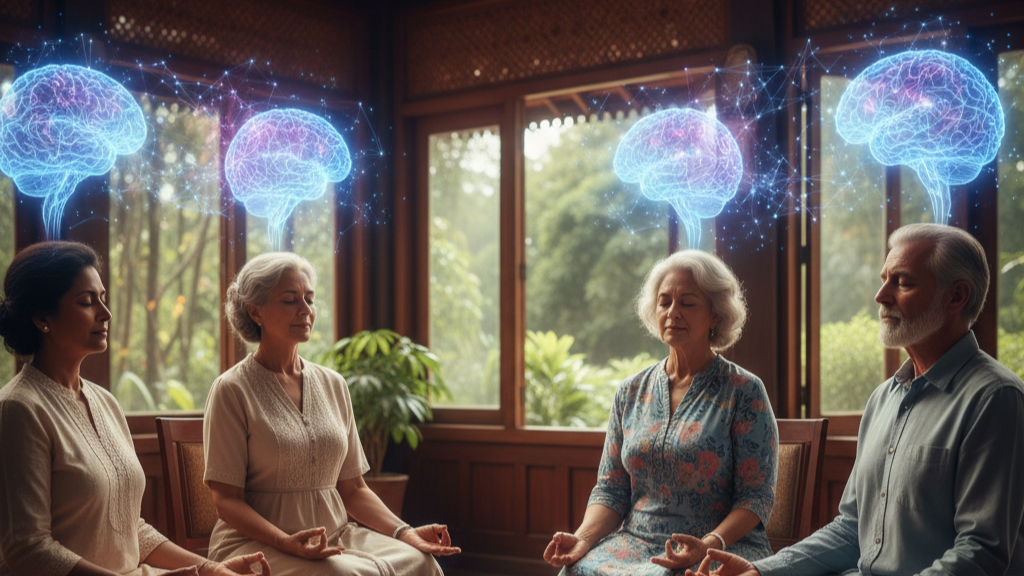
Cognitive decline isn't inevitable. Research consistently shows that the brain retains neuroplasticity well into old age — and meditation is one of the most effective ways to exercise it.[1] Studies on meditators over 50 show preserved grey matter volume, better memory recall, and slower age-related cognitive decline compared to non-meditators.
'
What the Research Shows
A landmark study from UCLA found that long-term meditators had better-preserved brains at age 50 than non-meditators.[1] More grey matter throughout the brain — not just in specific regions, but everywhere.
Other research found that just 8 weeks of mindfulness training improved working memory and attention in older adults.[1] Participants showed measurable improvements in cognitive tasks after daily 15-minute practice sessions.
For those concerned about dementia, a systematic review found that meditation may improve cognitive function in people with mild cognitive impairment — the stage between normal ageing and dementia.
Gentle Techniques for Any Mobility Level
1. Chair Meditation (Seated)
Sit in a comfortable chair with feet flat on the floor. Hands on thighs or in your lap. Close your eyes or lower your gaze. Breathe naturally and count each exhale to ten. Repeat. Start with 5 minutes, building to 15.
If you have back pain, use a cushion for lumbar support. If arthritis makes sitting uncomfortable, recline slightly.
2. Loving-Kindness Practice
This is particularly valuable for seniors dealing with loneliness, grief from losing friends and partners, or health anxiety. Sit comfortably. Breathe slowly. Silently repeat: 'May I be happy. May I be healthy. May I be at peace.' Then extend to others: 'May my family be happy. May my friends be well.'
Research shows loving-kindness meditation increases positive emotions and social connection — two factors that strongly predict cognitive health in older adults.
3. Memory Meditation
Choose a positive memory. Close your eyes and reconstruct it in detail. What could you see? Hear? Smell? Feel? Spend 5 minutes inhabiting the memory as fully as possible. This exercises memory recall and visualisation — cognitive functions that benefit from regular use.
4. Walking Meditation (If Mobile)
Walk at your natural pace — no need to slow down unnaturally. Focus on the sensation of each step. If you use a walking aid, feel the grip in your hand and the ground contact through the aid. Even a short walk to the kitchen can be mindful.
5. Guided Audio Meditation
For those who find solo practice difficult, guided meditations provide structure and a voice to follow. Apps like Insight Timer have specific programmes for older adults. Alternatively, YouTube has thousands of free guided sessions — search for 'gentle meditation for seniors.'
Getting Started
Start with 5 minutes daily. The most common mistake is attempting too long too soon, leading to discouragement. Five minutes of consistent daily practice produces better results than sporadic longer sessions.
The best time is whatever time you'll remember. Many seniors find morning works well — it becomes part of the tea or coffee routine.
For general information only, not a substitute for professional medical care. In a crisis or severe symptom onset, consult a qualified healthcare provider immediately.