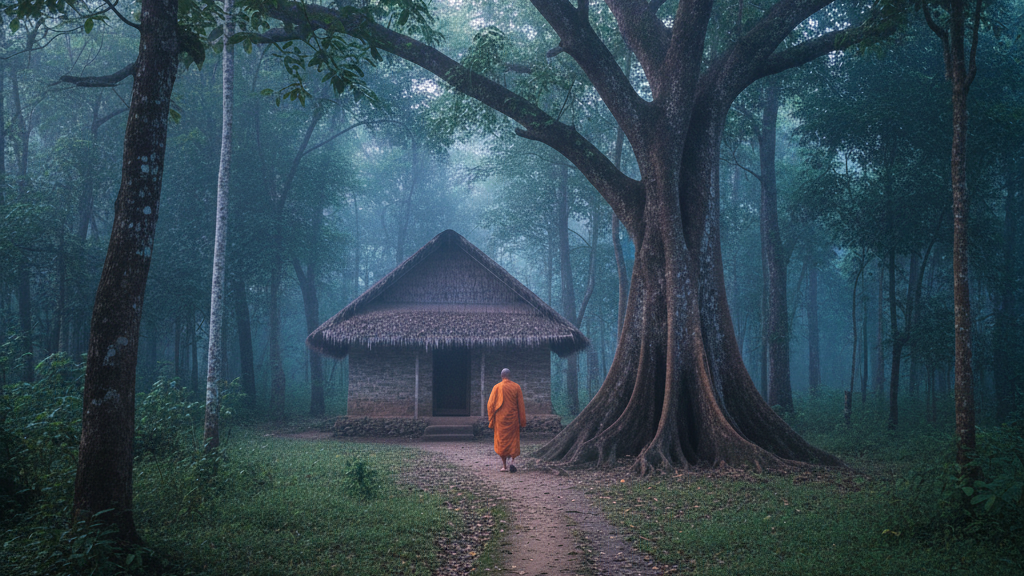
Forest Monastery Meditation: Inside Sri Lanka's Jungle Hermitages
InnerCalmGuide·Feb 23, 2026·3 min read
Deep in Sri Lanka's forests, away from temple towns and tourist trails, a network of forest monasteries (aranya) preserves the oldest form of Buddhist monastic life. These aren't retreats. They're functioning communities of monks who have chosen the most radical simplicity available in the modern world — and who practise meditation as their primary occupation.
What a Forest Monastery Is
A Sri Lankan aranya (forest hermitage) typically consists of individual kutis (huts) scattered through dense forest, connected by jungle paths. Each kuti is a small structure — one room, a bed, a chair, sometimes a desk. No air conditioning. Often no electricity. Water from a well or rainwater collection.
The central area includes a meditation hall (dhamma sala), a dining hall where the single daily meal is taken, and a Bodhi tree. The forest is not a backdrop — it's an integral part of the practice environment. Trees, wildlife, rain, and silence create conditions that facilitate meditation naturally.
The Daily Schedule
3:30 AM: Wake. The forest is alive at this hour — insects, nocturnal birds, the occasional elephant in some locations. Wash with cold water (there is no hot water).
4:00 AM: Morning meditation in the dhamma sala or individual kuti. Sitting and walking meditation, alternating in one-hour blocks.
6:00 AM: Chanting. The monks chant Pali suttas together — a powerful communal practice that sets the day's tone.
7:00 AM: Alms round (pindapata) or meal preparation. In some forest monasteries, monks walk to nearby villages to collect food. In others, laypeople bring food to the monastery. Either way, the food is simple — rice, vegetables, curry, fruit.
8:00-10:00 AM: The single meal of the day. Eaten mindfully, in silence, before midday (following the Vinaya rule). After this, no solid food until the following morning.
10:00 AM - 12:00 PM: Meditation or study. Some monks study Pali texts. Others continue meditation practice.
12:00 PM - 5:00 PM: Individual practice. This is the heart of forest monastery life — hours of unstructured time for deep meditation. Monks choose their own balance of sitting, walking, and contemplation. The forest provides the perfect environment — cool shade, natural sounds, profound stillness.
5:00 PM: Tea and light refreshment (fruit juice or herbal drinks are permitted after midday).
6:00 PM: Evening meditation. As darkness falls in the forest, the quality of meditation often deepens. The absence of artificial light means darkness is absolute — profoundly conducive to inward attention.
8:00 PM: Rest. Most monks sleep 4-6 hours. The early bedtime and early rising synchronise with natural light cycles.
What You Experience as a Lay Visitor
Several forest monasteries accept lay meditators for short stays (7+ days). The experience is transformative and uncomfortable in equal measure. You follow the monastic schedule. One meal a day. No phone, no books, no writing materials (in some hermitages). Noble silence.
The first 2-3 days are often the hardest — hunger, boredom, physical discomfort, and the mental noise that emerges when every distraction is removed. By day 4-5, something shifts. The hunger diminishes. The silence becomes comfortable. The meditation deepens. By day 7, many visitors describe a clarity and peace unlike anything they've experienced.
Notable Forest Monasteries
Mitirigala Nissarana Vanaya: Perhaps the most famous, in dense forest near Colombo. Strict and traditional.
Na Uyana Aranya, Pansiyagama: One of the largest forest monasteries in Sri Lanka, with extensive walking paths through ancient forest.
Galduwa Forest Hermitage, Dodanduwa: Southern coast forest monastery known for its Abhidhamma (Buddhist psychology) study tradition.
Udawattakele Forest Hermitage, Kandy: Accessible forest practice within walking distance of Kandy city.
Is Forest Monastery Life For You?
If you have an established meditation practice and want to go deeper, a forest monastery stay is unmatched. If you're a beginner, start with a structured centre like Nilambe or Kanduboda first. The forest monastery environment assumes a foundation of practice — and tests it thoroughly.
For general information only, not a substitute for professional medical care. In a crisis or severe symptom onset, consult a qualified healthcare provider immediately.