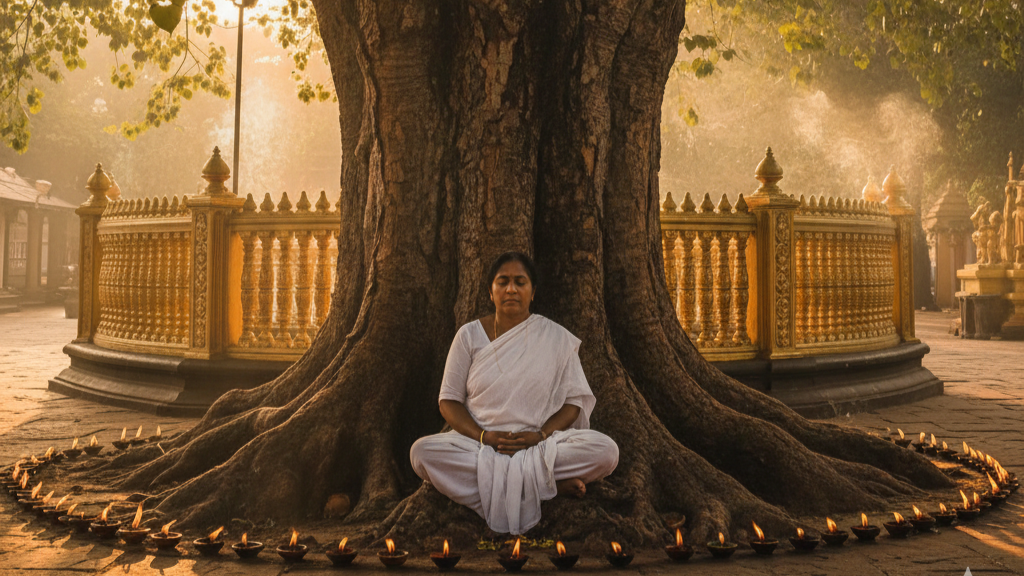
Bodhi Tree Meditation: Practising Under the Sacred Fig in Sri Lanka
InnerCalmGuide·Feb 23, 2026·3 min read
In every Sri Lankan Buddhist temple, a Bodhi tree (Ficus religiosa) stands in a place of honour. These trees are descended — by lineage of cuttings — from the Jaya Sri Maha Bodhi in Anuradhapura, which was grown from a branch of the original Bodhi tree under which Siddhartha Gautama became the Buddha in Bodh Gaya, India, approximately 2,500 years ago.
The Jaya Sri Maha Bodhi, planted in 288 BCE, is the oldest historically documented tree in the world. And it's alive. Growing. You can sit under it today and meditate where pilgrims have meditated for over 2,300 years.
Why Bodhi Trees Matter for Meditation
Beyond symbolism, there are practical reasons Sri Lankan meditators seek out Bodhi trees:
Environmental quality: Ficus religiosa produces oxygen at night (unlike most trees), making the air around Bodhi trees subtly different. The canopy provides deep shade while allowing dappled light. The rustling heart-shaped leaves create a natural white noise that supports concentration.
Psychological association: Meditating under a Bodhi tree connects you to a 2,500-year lineage of practice. The psychological power of this connection — sitting where thousands of sincere practitioners have sat — is real and measurable. Environmental psychology research shows that places associated with meaningful activity naturally induce states of focus and reverence.
Community energy: Sri Lankan Bodhi trees are always located in temple compounds where monks and laypeople practise daily. The accumulated 'energy' of continuous practice in a location is subjective but widely reported by meditators across traditions.
Where to Find Sacred Bodhi Trees
Jaya Sri Maha Bodhi, Anuradhapura: The most sacred tree in Buddhism. Over 2,300 years old. Surrounded by golden railings and attended by monks continuously. Meditation here is a profound experience — pilgrims come from across Asia. Best visited at dawn before crowds arrive.
Kelaniya Raja Maha Vihara, Colombo: One of the most important temples near Colombo, with a beautiful Bodhi tree and regular meditation sessions.
Temple of the Tooth (Sri Dalada Maligawa), Kandy: While famous for the tooth relic, the temple compound includes peaceful Bodhi tree areas suitable for meditation.
Any village temple: Every temple (pansala) in Sri Lanka has a Bodhi tree. Village temples are often deserted during weekday mornings — perfect for undisturbed practice. Ask the chief monk (loku hamuduruwo) for permission to meditate, which is always graciously granted.
How to Practise
Approach the Bodhi tree respectfully. In Sri Lankan tradition, worshippers circle the tree clockwise three times while chanting or in silent contemplation. This circumambulation (pradakshina) settles the mind and creates a transition from ordinary consciousness to meditative awareness.
Sit facing the tree on a mat or cloth (sitting directly on the ground is fine — Sri Lankan meditators often sit on a simple white cloth). Cross-legged or kneeling. Close your eyes. Begin with anapanasati (breath awareness) or metta (loving-kindness).
The sounds around a Bodhi tree — leaves rustling, birds, distant chanting — become part of the meditation rather than distractions. In the Theravada tradition, these sounds are objects of mindfulness: hearing, hearing, hearing.
Bodhi Puja
Sri Lanka has a unique practice called Bodhi Puja — a ceremony of chanting, meditation, and offering at the Bodhi tree. Water is poured at the roots while Pali verses are recited, prayers are made, and oil lamps are lit. Bodhi Puja is performed for healing, protection, and spiritual development. Participating in a Bodhi Puja — even as an observer — is a moving experience that combines devotion, meditation, and community.
For general information only, not a substitute for professional medical care. In a crisis or severe symptom onset, consult a qualified healthcare provider immediately.